 Ultimate guide
The Beginner's Guide to Meal Prepping
Last Updated: October 26, 2026
Quick Summary
Meal prepping for beginners means planning your meals, shopping once with a list, and cooking or assembling in a single block of time each week. Start with component prep: prepare building blocks like grains, roasted vegetables, and a protein, then assemble meals fresh each day. Budget about one hour for planning and shopping and two to three hours for your first cooking session.
- Choose four to six recipes rather than ten, and build your grocery list from those recipes.
- Cook in order of longest to shortest: oven items first, grains on the stove, then chopping and sauces.
- Cooked meal prep lasts three to four days in the fridge, and up to five days for grains and stews.
- Cool food on the counter for 20 to 30 minutes before sealing containers to avoid soggy vegetables.
- Build every meal from four parts: a protein, a starch, a vegetable, and a sauce or fat.
Table of Contents
- What Meal Prepping Really Involves
- How to Meal Prep for the Week in Five Steps
- Easy Meal Prep Ideas for Beginners
- Your First Meal Prep Grocery List
- How Long Does Meal Prep Last in the Fridge?
- Five Mistakes That Sink a Beginner's Meal Prep
- Let MealPrepGenius Build Your First Week
- Frequently Asked Questions
What Meal Prepping Really Involves
Meal prepping is the practice of planning and preparing meals or meal components ahead of time so that daily cooking becomes a matter of assembling rather than starting from scratch.
Here is the honest version most guides skip. To see what finished meal plans actually look like, browse Sample Plans.
The style you choose changes how much of that block you actually spend cooking. That is where most beginners go wrong first.
The Three Styles of Prep: Batch, Component, and Ready-to-Eat
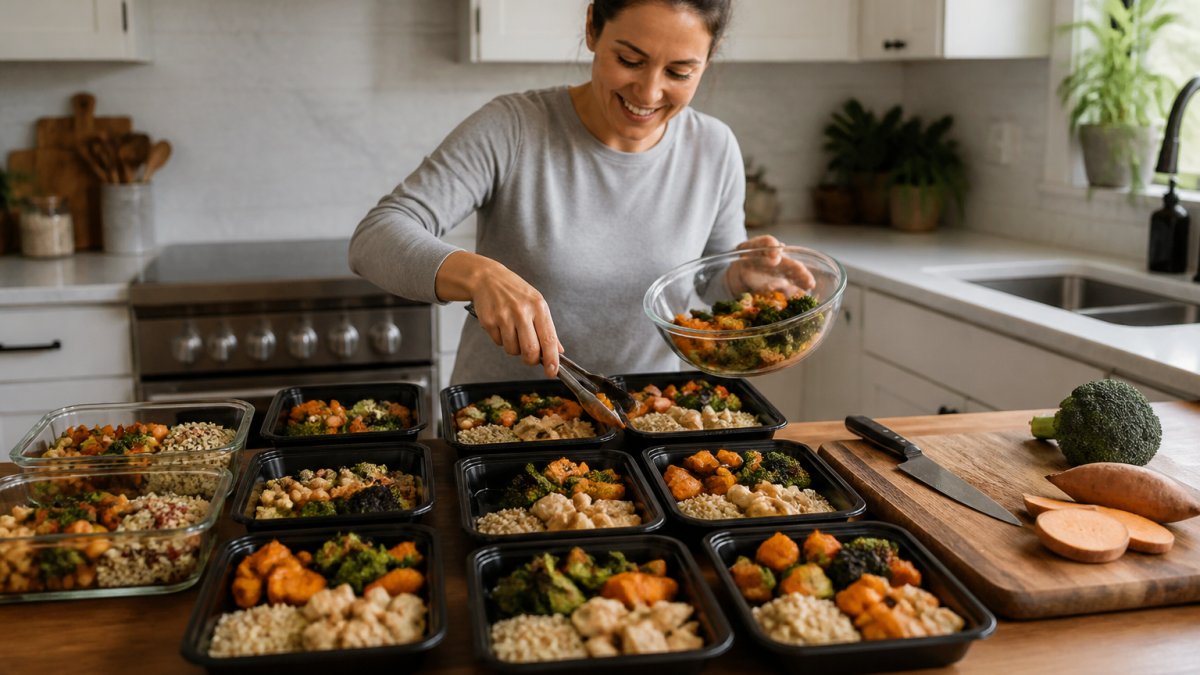
Batch prep means cooking one or two proteins and one or two starches in large quantities, then portioning them into containers to combine with fresh or frozen vegetables during the week. Component prep goes a step further: you prep the building blocks (cooked grains, roasted vegetables, a sauce, a protein) and assemble meals fresh each day so nothing tastes like day-four leftovers. Ready-to-eat prep means fully assembled meals, portioned and stored, ready to reheat.
Our recommendation for a first attempt is component prep. It gives you variety without extra cooking, and it forgives a schedule that changes mid-week. Batch cooking suits anyone feeding a family or eating the same lunch daily. Ready-to-eat meals work best when your week has zero flexibility and you want to grab and go. If batch prep sounds like your fit, batch prep plans are worth seeing before you commit to a style.
How to Meal Prep for the Week in Five Steps
The five steps below take a beginner from an empty fridge to a week of planned meals. Budget roughly one hour for planning and shopping and two to three hours for cooking on your first attempt. It gets faster from week two, most people cut their prep time by about a third once the routine is familiar.
- Pick your prep day and protect it. Sunday afternoon works for most people, but any fixed two-to-three-hour window will do. The day matters less than the consistency. Put it on your calendar like an appointment, and tell the people you live with so it doesn't get bumped. If your weekends are unpredictable, a Wednesday evening prep for Thursday through Sunday is a valid alternative, the point is a recurring slot, not a specific day.
- Choose four to six recipes, not ten. Beginners over-plan. Four recipes that share ingredients beat six that don't. Aim for two lunches, two dinners, and one breakfast you can repeat. Write them down with the exact quantities you'll cook, for example, 2 kg of chicken thighs, 4 cups of dry rice, 3 sheet pans of vegetables, so your shopping list is built from real numbers rather than vague intentions.
- Build the grocery list from the recipes, not from memory. List every ingredient by category: produce, protein, grains, dairy, pantry. Cross off anything you already own. This is the step that prevents duplicate buys and the wasted produce that sinks most first weeks.
- Shop once, with the list. Check what you already own before you leave. Shop the perimeter first (produce, protein, dairy) and the aisles second (grains, pantry) so cold items spend less time in the cart.
- Cook in order of longest to shortest. Oven items first, grains on the stove, then chopping and sauces while things bake. A practical sequence for a first session: preheat the oven and start roasting vegetables and protein, put rice or quinoa on the stove, then chop raw vegetables and mix sauces while both cook. Cool everything before sealing (see the storage section below).
A Realistic First-Session Timeline
A first prep session usually runs longer than expected. Here is a realistic two-and-a-half-hour block:
- 0:00-0:15, Preheat oven, rinse and chop vegetables, season protein.
- 0:15-0:45, Protein and vegetables in the oven; start grains on the stove.
- 0:45-1:15, Mix sauces, chop raw vegetables for salads, portion snacks.
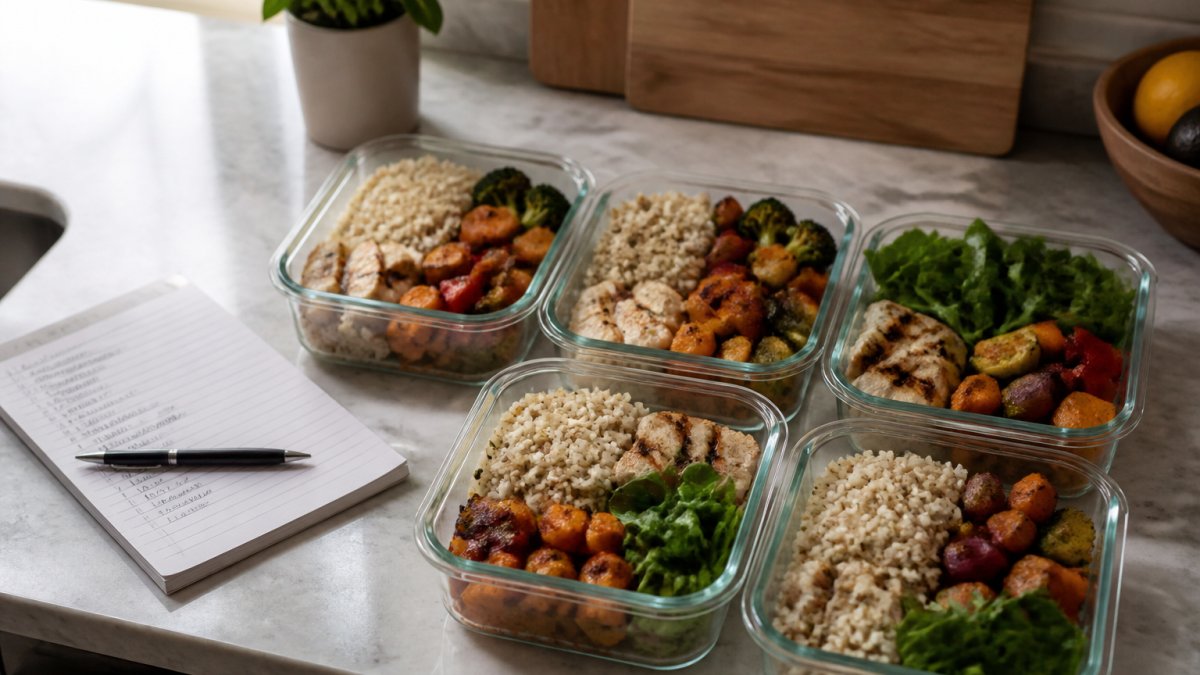
Watch out: cooking everything on the same day without cooling it properly first is the most common first-week mistake. Hot food sealed into containers traps steam, which makes vegetables soggy and shortens how long the meal keeps. Let food cool on the counter for 20-30 minutes before lidding, and don't stack hot containers on top of each other in the fridge.
Easy Meal Prep Ideas for Beginners
Easy meal prep ideas for beginners share one trait: they use a small number of ingredients across several meals.
Keep your first week to recipes with five ingredients or fewer and a cooking time under 30 minutes. Sheet-pan dinners, grain bowls, overnight oats, and slow-cooker proteins all qualify. Avoid anything that requires last-minute frying; reheated fried food rarely survives the microwave well.
Build Every Meal from Four Parts
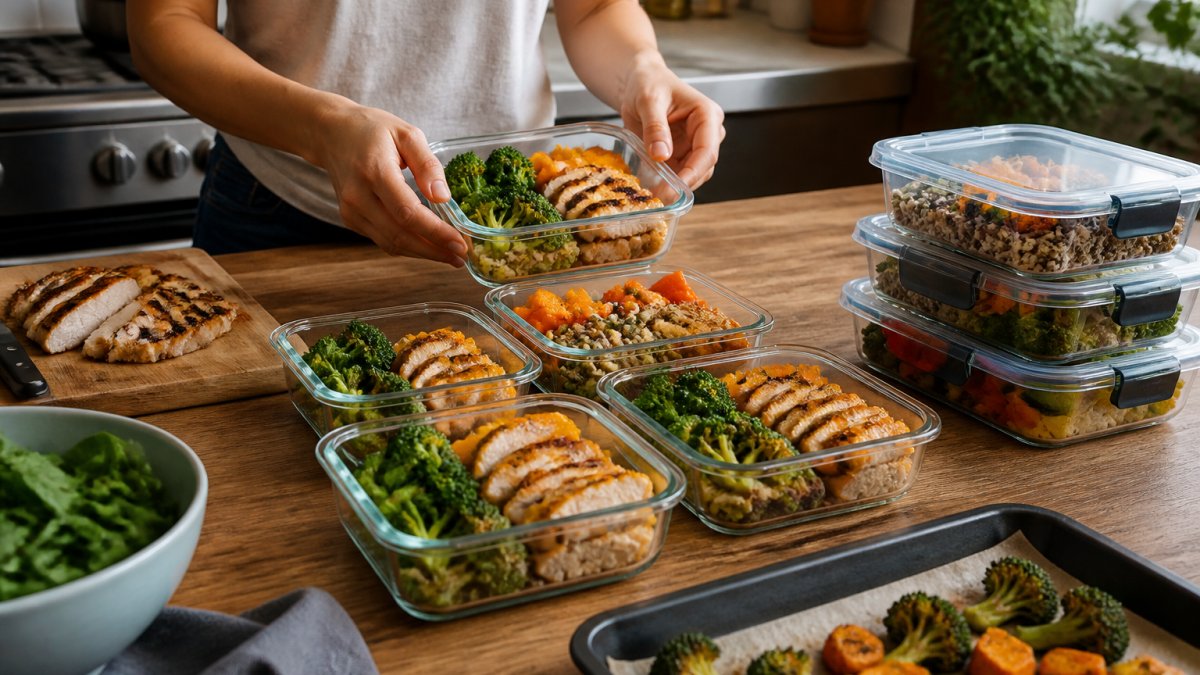
Every balanced meal you prep can follow the same formula: a protein, a starch, a vegetable, and a sauce or fat. Chicken, fish, or beans for protein. Brown rice, quinoa, farro, or pasta for the starch.
This framework does the thinking for you. Swap the protein and the sauce and you have a different meal from the same prep session.
Your First Meal Prep Grocery List
A meal prep grocery list is organized by store section, not by recipe, so you shop once without backtracking. Build it after you've chosen recipes and checked your pantry.
- Produce: onions, garlic, peppers, broccoli, carrots, spinach, lemons
- Protein: chicken thighs, eggs, canned chickpeas, Greek yogurt
- Grains and starch: brown rice, quinoa, whole-wheat pasta, potatoes
Buy frozen vegetables for anything you'll cook into a dish; they're cheaper, last longer, and reduce waste. If you'd rather the list built itself from your chosen meals, an automatically generated grocery list removes the most tedious step of the whole process.
How Long Does Meal Prep Last in the Fridge?
Cooked meal prep lasts three to four days in the refrigerator for most proteins and vegetables, and up to five days for grains and sturdy dishes like stews. The USDA food safety guidance on leftovers sets the general rule: refrigerate cooked food within two hours and discard it after four days if you're unsure. Freeze anything you won't eat by day three.
Store components separately rather than assembled. Sauce on the side, vegetables in their own container, protein sealed tight. Reheat only what you're eating that day, and reheat to steaming hot, not merely warm. A refrigerator thermometer is a cheap habit; keep it at or below 4°C (40°F).
Freezer Strategy: What Freezes Well and What Doesn't
The freezer is the beginner's best defense against wasted food and mid-week takeout. The general rule: freeze anything you won't eat within three days, and label every container with the contents and the date it went in.
Freezes well:
- Cooked proteins, chicken thighs, ground meat, meatballs, pulled pork, chili, stews, and curries.
- Grains, cooked rice, quinoa, and farro freeze and reheat cleanly; portion into single servings before freezing.
- Soups, sauces, and stocks, freeze flat in bags or in portioned containers.
Doesn't freeze well:
- Raw vegetables with high water content, cucumbers, lettuce, celery, and tomatoes turn mushy.
- Cooked potatoes and pasta, they can go grainy or watery; freeze sauces separately instead.
- Dairy-based sauces and cream soups, they can separate on thawing.
Freezer timelines (common guidance): cooked chicken and other poultry, 2-6 months; cooked beef and pork, 2-3 months; soups and stews, 2-3 months; cooked grains, 1-2 months. Use the shorter end of the range for anything with a high water content.
Cooling, Labeling, and Reheating
- Cool before freezing. Let cooked food cool on the counter for 20-30 minutes, then refrigerate until cold before transferring to the freezer. Freezing hot food in a sealed container traps steam and forms ice crystals that degrade texture.
- Label everything. Write the contents and the date on the lid or a piece of tape. A freezer full of unlabeled containers is a freezer full of mystery meals nobody eats.
- Portion before freezing. Freeze in single servings so you thaw only what you need. Flat freezer bags thaw faster than deep containers.
A simple weekly rhythm keeps this manageable: eat fresh prepped food Monday through Wednesday, move Thursday and Friday portions to the freezer on day three, and thaw them the night before you need them.
Five Mistakes That Sink a Beginner's Meal Prep
The mistakes below account for most abandoned first attempts. Beginners worried about these pitfalls can get guided help from Prep Coach. Each has a simple fix.
| Mistake | Why it fails | Fix |
|---|---|---|
| Planning too many recipes | Cooking time balloons, food spoils | Four to six recipes maximum |
| Not cooling food before sealing | Soggy vegetables, faster spoilage | Cool 20-30 minutes, then lid |
| Prepping only lunches | Breakfast and dinner collapse by day two | Plan all meals you skip cooking |
| Ignoring your actual schedule | Mid-week plan changes derail you | Choose component prep over ready-to-eat |
| Shopping without a list | Duplicate buys, wasted produce | List by store section, check pantry first |
The fifth one costs more than people expect. Buying without a list is the main reason beginners overspend and throw food away.
Let MealPrepGenius Build Your First Week
The hardest part of meal prepping is not cooking. It is holding the whole system in your head: what you're eating, what you bought, what's about to spoil, and what fits your goals.
Our platform generates personalized meal plans around your dietary needs and targets, produces an automated grocery list from those plans, and organizes your batch-prep tasks so you know what to cook first.
Frequently Asked Questions
What is the 3-3-3 rule for meal prep?
It is a simple starting framework: prep three meals, for three days, using three main ingredients. You cook one protein, one grain, and one vegetable in larger amounts, then portion them into three days of meals. The rule keeps your first prep session under an hour and stops you from cooking food that goes bad before you eat it. Once three days feels easy, extend to five days or add a second protein.
How many days ahead should a beginner meal prep?
Start with three days, not seven. Most cooked food holds well for three to four days in the refrigerator, so a three-day window means nothing is wasted while you learn your rhythm. Prep on a Sunday or Monday, then do a short mid-week top-up of fresh components. Once the habit sticks, move to a full week and freeze the second half of your portions.
What foods are easiest to meal prep for beginners?
Choose foods that reheat without turning rubbery or soggy. Chicken thighs, ground meat, hard-boiled eggs, brown rice, quinoa, farro, pasta, roasted root vegetables, and sturdy greens like kale all hold up well. Keep delicate items such as fish, avocado, and dressed salads for the day you eat them. Portion everything into storage containers while it is still slightly warm, then chill quickly.
How do you store meal-prepped food safely?
Cool cooked food within two hours of cooking, then refrigerate it in shallow, airtight containers so it chills fast. Keep raw meat on the bottom shelf and cooked food above it. Label each container with the date. Reheat to steaming hot all the way through, and never reheat the same portion twice. If a container has been out of the fridge for more than two hours, throw it out rather than risk it.
How can you meal prep on a tight budget?
Build meals around cheap staples: rice, oats, pasta, beans, lentils, eggs, and frozen vegetables. Buy protein in larger packs and freeze what you will not use within two days. Plan the grocery list around what is already in your fridge so nothing spoils. Cooking in batches and portioning into servings lowers your cost per meal and cuts the number of times you order takeout.
Can MealPrepGenius adjust my plan if my week changes?
Yes. The platform generates your recipes, grocery list, and batch-prep tasks, and you can adjust the plan when your schedule shifts rather than being locked into what you set on Sunday. That flexibility matters for people whose weeks change often, such as shift workers or parents juggling activities. You can also set dietary restrictions and macro targets so the adjustments stay within your goals.
Meal prepping rewards the person who starts small and stays consistent, not the one who cooks for eight hours on a Sunday and quits by Thursday. Start with four recipes, one prep day, and a list. When you're ready to stop planning by hand, generate your first week with MealPrepGenius and let the planning, shopping list, and prep schedule come together in one place.