 Ultimate guide
Meal Planning for Busy Working Parents Made Simple
Last Updated: November 8, 2026
Quick Summary
Meal planning for busy working parents works best as four repeatable steps: check the fridge, freezer, and pantry before shopping, choose meals by category rather than by recipe, build the grocery list from the plan, and batch cook and prep what earns its time. Follow the same sequence each week and planning becomes a short, familiar task.
- Plan on a fixed day in a predictable slot, even just twenty minutes.
- Assign each meal category a fast and a slow option for chaotic nights.
- Keep a safe food on every plate so new dishes are not a standoff.
- Eat refrigerated leftovers within a few days and freeze the rest.
- Print the week's plan, grocery list, and prep tasks for the fridge.
Table of Contents
- Why Meal Planning Collapses for Working Parents (and What to Fix First)
- A Weekly Meal Plan for Busy Moms and Dads in Four Steps
- Healthy Meal Planning for Busy Working Parents Without the Guilt
- Meal Planning Ideas for Busy Families: Breakfast, Lunch, and Dinner
- Using a Meal Planning for Busy Working Parents Printable
- Leftovers, Freezer Meals, and Food Safety Timelines
- Planning Around Picky Eaters, Allergies, and Different Schedules
- Start Your First Weekly Plan with MealPrepGenius
- Frequently Asked Questions
Why Meal Planning Collapses for Working Parents (and What to Fix First)
Meal planning for busy working parents fails for one reason: it gets treated as a recipe problem when it is actually a decision problem. Parents do not lack recipes. They lack a system that survives a Tuesday when a meeting runs long and a child needs dinner by six.
The fix is not a bigger cookbook. It is removing the daily "what's for dinner" decision entirely.
The Real Time Cost of Deciding at 6pm
Standing in front of an open fridge at 6pm is the most expensive moment in a working parent's week. The decision takes minutes, but the fallout lasts hours: a rushed grocery run, a takeaway order, or a meal nobody planned for.
The common mistake is blaming willpower. By evening, decision fatigue peaks, and any plan requiring fresh choices at that hour will lose.
Three Habits That Make a Weekly Routine Stick
Three habits carry most of the weight:
- Plan on a fixed day, not a free day. A predictable slot, even twenty minutes, beats waiting for a calm afternoon that never comes.
- Decide once, reuse often. Build a small rotation of proven family meals instead of a new menu each week.
- Prep only what saves weekday time. Chopping, cooking grains, and portioning proteins earn their effort; elaborate weekend projects rarely do.
A weekly routine sticks when it demands less, not more. Keep the plan small enough to follow on your worst day.
A Weekly Meal Plan for Busy Moms and Dads in Four Steps
A weekly meal plan for busy moms and dads works best as four repeatable steps: audit what you have, choose meals by category, build the list, then batch prep. Follow the same sequence each week and planning drops to a short, familiar task, the whole cycle can become a short, familiar task once it is routine.
Step 1: Check the Fridge, Freezer, and Pantry Before Shopping
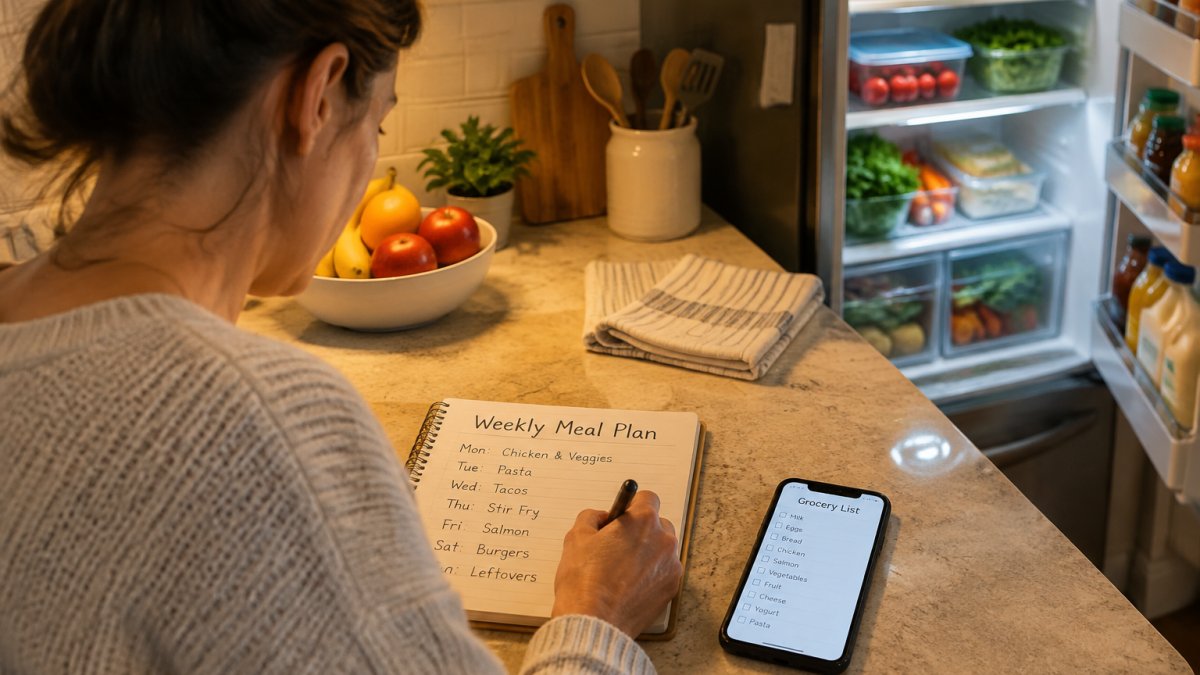
Start with what already exists. Open the fridge, dig through the freezer, and scan the pantry shelves. Note proteins, produce close to turning, and half-used staples. This single habit cuts food waste and shortens the grocery list before you write it.
Make the audit concrete: pull everything that needs to be used this week onto one shelf, and write down the three or four items most at risk of spoiling. Those become the anchors of your first two dinners. If the fridge holds odds and ends with no obvious meal, you can use what I have to build meals from your existing ingredients rather than shopping from scratch.
Watch out: auditing the fridge after you have already shopped is the most common order-of-operations mistake, it doubles the list and wastes the food you just bought.
Step 2: Choose Meals for the Week by Category, Not by Recipe
Pick categories first: two chicken dinners, one pasta night, one breakfast-for-dinner, one slow-cooker meal. Categories give flexibility. If Tuesday's plan falls apart, you swap within the category instead of abandoning the week.
This is where most plans break. Assign each category a "fast" and a "slow" option, so a long night can drop to the 15-minute version without a new decision. Sample plans show how a category-based week looks in practice.
Step 3: Build the Grocery List from the Plan
Write the list from the chosen meals, not from memory. Group items by store section so the shop runs in one pass. Check the pantry again as you go so you do not buy a third jar of cumin.
A generated list removes the guesswork. MealPrepGenius builds a grocery list directly from your chosen meals, so nothing on the plan is missing at the store.
Step 4: Batch Cook and Prep What Earns Its Time
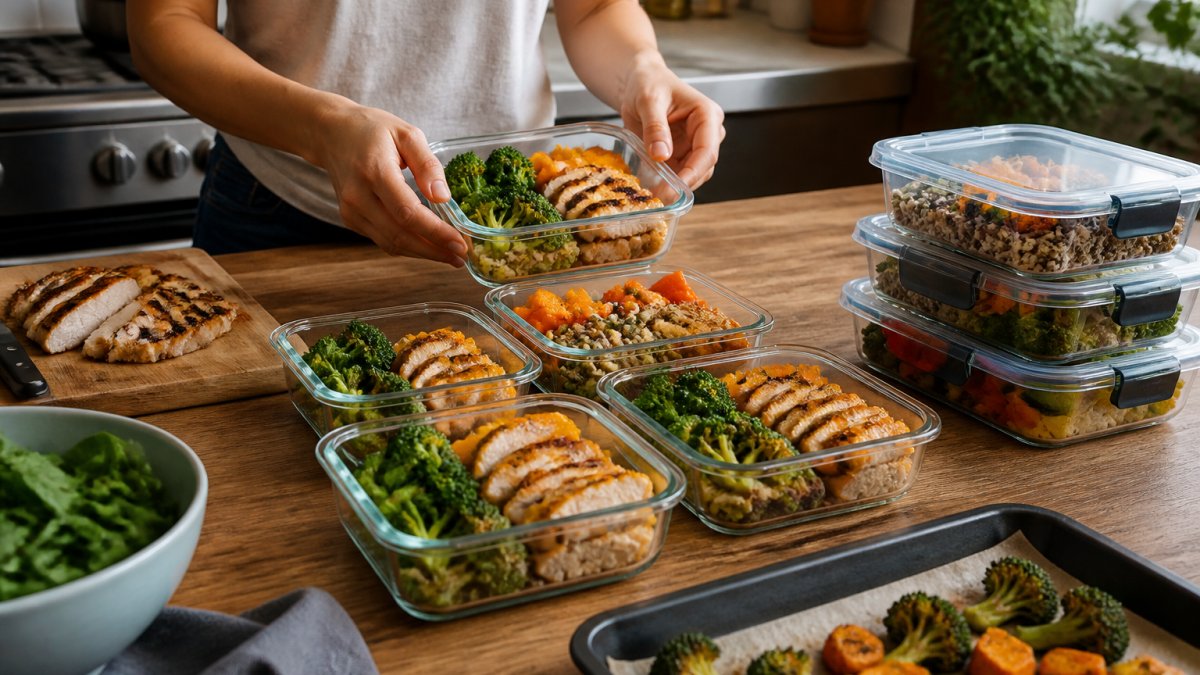
Not everything deserves prep. Cook a large batch of protein, wash and chop vegetables, cook grains, and portion snacks. Skip anything that keeps poorly or that your family will not eat as leftovers.
Judge prep tasks by active time versus hands-off time. MealPrepGenius includes batch-prep task management that lays out what to prep and when, so Sunday's effort pays off on Wednesday.
Adapting the Four Steps to Shift Work, Commuting, and Hybrid Schedules
Standard weekday routines do not match every household's schedule, which is one reason plans fail for shift workers, long commuters, and hybrid households.
- Shift work: Plan in "meal blocks" rather than days. Build three dinner categories that reheat cleanly and portion them into single servings so they can be eaten at 2 a.m. or 6 p.m. without re-cooking.
- Long commutes: Move the audit and list-building to a 15-minute slot on a low-energy evening, and reserve batch prep for a single weekend block. Choose meals that hold well in a cooler or reheat in a microwave at work.
- Hybrid schedules: Plan around the days you are home, not the days you are in the office. Home days carry the cooking; office days carry leftovers and freezer meals. A shared calendar note of who is home for dinner prevents the "I thought you were cooking" collapse.
A simple template works for all four: a grid with columns for day, meal category, fast/slow option, and who is responsible.
The weekly plan runs on the same four steps every time.
| Step | What to do |
|---|---|
| Step 1 | Check the fridge, freezer, and pantry before shopping |
| Step 2 | Choose meals by category, not by recipe |
| Step 3 | Build the grocery list from the plan |
| Step 4 | Batch cook and prep what earns its time |
Healthy Meal Planning for Busy Working Parents Without the Guilt
Healthy meal planning for busy working parents does not require perfection.
The guilt usually comes from an all-or-nothing standard. A rotisserie chicken, a bag of salad kits, and a pot of pasta is a legitimate dinner.
Consistency beats intensity. A family eating reasonably well-planned meals most weeks will outpace one chasing a perfect menu that collapses by Thursday.
Meal Planning Ideas for Busy Families: Breakfast, Lunch, and Dinner
Meal planning ideas for busy families work best when breakfast and lunch run on autopilot and dinner gets the attention. Simplify the first two meals and the daily load drops sharply.
Breakfast and Lunch Shortcuts That Still Count
Breakfast can repeat without complaint: overnight oatmeal, scrambled eggs with toast, cereal with fruit, or peanut butter on whole-grain toast. Set a default for each weekday and stop deciding.
Lunch leans on leftovers and assembly. Pack lunches the night before to remove the morning scramble.
Quick and Easy Family Dinners and Sample Menus
A sample week might run: skillet mac and cheese with a side salad on Monday, rotisserie chicken with roasted vegetables on Tuesday, pasta with a simple sauce on Wednesday, breakfast-for-dinner on Thursday, and a freezer meal on Friday. Every dinner lands on the table in under thirty minutes of active work.
Using a Meal Planning for Busy Working Parents Printable
A meal planning for busy working parents printable keeps the plan visible. A sheet on the fridge lets everyone see the week at a glance, even when a phone is left in another room.
Print the week's plan, the grocery list, and the prep tasks. A printable plan you can stick on the fridge bridges the gap between a digital plan and the offline reality of a busy kitchen.
Leftovers, Freezer Meals, and Food Safety Timelines
Leftovers and freezer meals are the backbone of a working week, but only when storage is handled correctly. Cool leftovers promptly, refrigerate in shallow containers, and label with the date.
Follow official food safety guidance for storage times rather than guesswork; the USDA FoodSafety.gov storage charts set out how long cooked foods keep in the fridge and freezer.
Planning Around Picky Eaters, Allergies, and Different Schedules
Households rarely eat as one unit. One child is gluten-free, a spouse is vegetarian, a parent tracks macros, and shifts change week to week. A plan that ignores this collapses on contact. Build meals with a customizable base, a protein, a starch, and a vegetable each person assembles to their needs, then layer in tactics for each kind of friction.
Picky Eaters: Buy-In Before the Plate
Picky eating is usually a control problem as much as a taste problem. Give children age-appropriate ownership of the plan and the resistance drops. Practical moves that most parents find workable:
- Let them choose within bounds. Offer two acceptable options per category ("chicken or pasta Tuesday?") rather than an open menu. The child gets a decision; the parent keeps the structure.
- Assign age-appropriate jobs. Preschoolers can wash produce and tear lettuce; early elementary kids can stir, scoop, and set the table; older children can assemble their own bowl or pack their own lunch from prepped components. Participation tends to increase willingness to eat what was made.
- Repeat without pressure. A food may need many exposures before acceptance; plan it in small amounts alongside familiar foods (Helping your child to accept new foods).
Watch out: cooking a separate "kid meal" every night quietly rebuilds the 6 p.m. decision problem, the goal is one base with components each person can take or leave, not two menus.
Allergies and Dietary Restrictions: Mechanics, Not Guesswork
Allergy safety is a planning constraint, not a preference. Build it into the plan at the category level so restricted ingredients never become the default:
- Map the restriction to the base. If one household member is gluten-free, choose a gluten-free starch as the shared base (rice, potatoes, corn tortillas) and keep gluten-containing bread or pasta as an optional add-on for others.
- Prevent cross-contact. Use separate serving utensils for the restricted dish, and prep restricted components first, or on a cleaned surface, so shared tools do not carry allergens.
- Read labels at the plan stage. Note which pantry staples are certified for the restriction, and keep a backup brand so a substitution does not derail the week.
For vegetarian or macro-tracking members, the same base logic applies: keep a plant protein and a portioned protein option alongside the shared starch and vegetable, and let each person assemble.
Different Schedules: Eat in Shifts from the Same Base
When shifts, commutes, or activities mean the household does not sit down together, plan meals that hold well and reheat cleanly rather than meals that peak at one moment.
A shared note, paper on the fridge or a family calendar, showing who is home for dinner and what the reheat instructions are removes the coordination tax.
Start Your First Weekly Plan with MealPrepGenius
Your first week will not be perfect, and it does not need to be.
MealPrepGenius was built for exactly this. It generates personalized meal plans, turns them into automated grocery lists, and manages batch-prep tasks so weeknights run on a plan instead of a scramble.
The challenge is not finding recipes; it is building a routine that holds up when the week gets hard.
Frequently Asked Questions
What is the 3-3-3 rule for meal prep?
The 3-3-3 rule is a simple batch-prep guideline: prepare three proteins, three vegetables, and three base carbs, then mix them into different meals across the week. For example, cook chicken, ground beef, and eggs alongside rice, pasta, and potatoes, then combine them with roasted vegetables for variety. It works well for busy working parents because one prep session creates the building blocks for several family meals, and picky eaters can assemble plates from the parts they like.
How can working parents plan meals for the week without spending hours?
Keep the plan short and repeatable. Check the fridge, freezer, and pantry first, then pick five dinners from a small set of family favorites instead of hunting for new recipes. Build your grocery list straight from those meals, and batch prep only the components that save real time, such as cooking a whole chicken, washing salad greens, or making a double batch of pasta sauce. A weekly meal plan for busy moms and dads can be a short task rather than an entire evening.
How do I make a meal plan that works for picky eaters?
Plan meals with a customizable base: a protein, a carb, and a vegetable served separately so each person can build their own plate. Keep one safe, familiar option on the table at every dinner, and introduce new foods alongside it rather than as the whole meal. Involving kids in choosing two dinners a week also raises the odds they eat them.
How long do leftovers and freezer meals stay safe to eat?
Cooked leftovers should go in the fridge within two hours of cooking and are generally best eaten within three to four days. Frozen batch-cooked meals keep well for about two to three months at a steady freezer temperature; label containers with the date so you know what to use first. Reheat leftovers until steaming hot all the way through, and never refreeze a meal you have already thawed.
Can meal planning help a family on a budget?
Yes. Planning meals around what you already have in the fridge, freezer, and pantry cuts duplicate grocery shopping, and building a list from the plan reduces impulse buys. Stretching one protein across two dinners, such as a rotisserie chicken used for chicken Caesar pitas one night and a salad the next, lowers cost per meal. MealPrepGenius generates a grocery list from your chosen recipes, so you buy what the plan needs rather than guessing.
How do you meal prep when your schedule changes week to week?
Plan for flexibility rather than a rigid seven-day grid. Choose meals by category, such as two quick skillet dinners, one slow-cooker meal, and two no-cook or leftover nights, then swap them around as the week shifts. Keep two backup meals in the freezer for the days that fall apart.
What is the 5-4-3-2-1 food rule?
The 5-4-3-2-1 rule is a daily guideline some families use: five servings of fruits and vegetables, four servings of water, three servings of protein, two servings of whole grains, and one serving of dairy or a dairy alternative. It is a rough framework, not a medical prescription. For busy working parents, it can act as a quick check on whether the week's meal plan covers the main food groups rather than relying on takeout.