 How-to
How Do You Meal Prep to Hit Your Protein Macros?
Last Updated: November 14, 2026
Quick Summary
To meal prep for protein macros, set a daily protein target, divide it across your meals, and build each meal around a protein source first before adding carbs and fat. Cook three protein bases in one session, portion by cooked weight, and label containers so every meal hits its number.
- A 160g daily protein target split across four meals becomes 40g of protein per meal.
- Protein provides about 4 calories per gram, so 160g protein is roughly 640 calories.
- Cooked meat loses water, so weigh the full cooked batch and divide by the containers you filled.
- Cook one protein, one carb, and one vegetable, then combine them differently across the week.
- Cool cooked food quickly, refrigerate promptly, label with the cook date, and reheat to steaming hot.
Table of Contents
- Why Protein-Focused Meal Prep Beats Guessing at Meals
- Macro Meals for Beginners: Start With Three Numbers
- How to Calculate Macros for Meal Prep Without a Nutrition Degree
- High Protein Meal Prep Recipes That Fit Your Macro Targets
- High Protein Macro Friendly Recipes for Weight Loss (Without Losing Flavor)
- Portioning, Weighing, and Calculating Macros for Batch-Cooked Recipes
- Storage, Freezing, and Reheating: Keep Your Protein Meals Safe
- Build Your First Protein-Focused Prep Plan in MealPrepGenius
- Frequently Asked Questions
Why Protein-Focused Meal Prep Beats Guessing at Meals
Most people who track protein macros for the first time do it by eye.
Protein-focused meal prep replaces guesswork with a repeatable system.
Here's the honest part. Meal prep fails when it's vague. "I'll cook some chicken on Sunday" is not a plan.
Below, we'll show you exactly how to build that plan, with recipes, portioning math, and storage guidance you can use this week.
Macro Meals for Beginners: Start With Three Numbers
Macro meals for beginners come down to three numbers: protein, carbs, and fat. Get those roughly right and you're ahead of most people.
A balanced meal usually looks like this:
- Protein: the anchor of the plate, measured in grams
- Carbohydrates: rice, potatoes, oats, bread, fruit
- Fat: oils, nuts, cheese, avocado, fatty cuts
You don't need perfect numbers. You need consistent ones.
Protein is the priority. It's the macro most people under-eat and the one that supports muscle building, fat loss, and satiety.
A simple beginner rule: build every meal around a protein source first, then add carbs and fat to fit your remaining macros.
How to Calculate Macros for Meal Prep Without a Nutrition Degree
Learning how to calculate macros for meal prep takes about ten minutes. You need a daily protein target, a calorie target, and a way to divide them across meals. Here is the full workflow with a worked example, plus how to adjust when your targets change.
Step 2: Set your calorie target. This comes from your goal: maintenance, fat loss, or muscle building.
Step 4: Fill in carbs and fat. Protein provides about 4 calories per gram, so 160g protein is about 640 calories. Subtract that from 2,200, leaving about 1,560 calories for carbs and fat. If you split the remainder roughly evenly, that is about 780 calories each. At 4 calories per gram for carbs and 9 for fat, that is roughly 195g carbs and 85g fat per day. Divide those across four meals too: about 49g carbs and 21g fat per meal.
| Step | What You Decide | Example |
|---|---|---|
| 1 | Daily protein target | 160g |
| 2 | Daily calorie target | 2,200 |
| 3 | Meals per day | 4 |
| 4 | Protein per meal | 40g |
| 5 | Carbs and fat split | ~195g carbs, ~85g fat per day |
Step 5: Translate targets into portions. This is the step most guides skip. Use cooked weights and per-portion protein numbers from your base recipes.
Step 6: Adjust when targets change. If your protein target rises from 160g to 180g, add 5g protein to each of four meals rather than redesigning the plan. That is roughly an extra 20-25g cooked chicken per meal, or a half-scoop of protein powder at breakfast. If your calorie target drops, cut fat and carbs first, not protein, because protein protects muscle and satiety. If you swap a base, recheck its per-portion protein: replacing chicken with white fish changes the number, so recalculate that meal rather than assuming it still fits.
Watch out: the biggest error is calculating macros once and never revisiting them.
A simple beginner rule ties it together: build every meal around a protein source first, then add carbs and fat to fit your remaining macros.
High Protein Meal Prep Recipes That Fit Your Macro Targets
High protein meal prep recipes work best when they are built from flexible base recipes. Cook one protein, one carb, one vegetable, then combine them differently across the week. That is the system. Here is a concrete version you can run this Sunday, with quantities, per-serving protein, and a prep order.
The Three-Base Prep Plan (4 Days, 4 Meals Per Day)
This plan assumes a 160g daily protein target split across four meals (40g per meal). Adjust portions up or down to fit your own numbers. It uses three protein bases, one breakfast, and two snacks, and it reuses the same carb and vegetable components so nothing is cooked twice.
Base 1: Roasted chicken (about 1.2 kg raw boneless thighs or breasts). Season with paprika, garlic powder, salt, and pepper. Roast at 200°C / 400°F until the thickest part reaches 74°C / 165°F.
Base 2: Lentil and tomato pot (about 400g dry lentils). Simmer with stock, garlic, onion, and canned tomatoes until tender. Dry lentils roughly triple in weight when cooked, so 400g dry yields about 1.1-1.2 kg cooked.
Base 3: Tuna yogurt mix (4 cans, about 145g drained each). Mix tuna with Greek yogurt, lemon, and mustard. Each can provides roughly 25-30g protein; a half-can portion with 2 tablespoons of Greek yogurt lands near 18-20g protein. This is the no-reheat lunch base.
Carb and vegetable components. Cook one large batch of rice or couscous (about 300g dry, yielding roughly 900g cooked) and roast two trays of vegetables (peppers, zucchini, broccoli) with a little oil. These are portioned alongside every base so you are not cooking a new side each day.
How the Bases Combine Into Meals
- Lunch A: Chicken (110g cooked) + couscous (150g cooked) + roasted peppers, about 40g protein
- Lunch B: Lentils (200g cooked) + chicken (60g cooked) + spinach, about 38-40g protein
- Dinner A: Chicken (110g cooked) + rice (150g cooked) + broccoli, about 40g protein
- Dinner B: Tuna yogurt mix (half can + yogurt) + whole grain bread + salad, about 35-40g protein
- Breakfast: Overnight oats with protein powder or Greek yogurt (see below), about 30-35g protein
- Snacks: Boiled eggs, cheese, nuts, yogurt, 10-20g protein each
Breakfast and Snack Options That Add Protein Grams
Breakfast is where most protein targets quietly fail. Oatmeal alone will not do it.
- Overnight oats: 50g oats + 1 scoop protein powder + 150g Greek yogurt + milk. Roughly 35-40g protein depending on the brands.
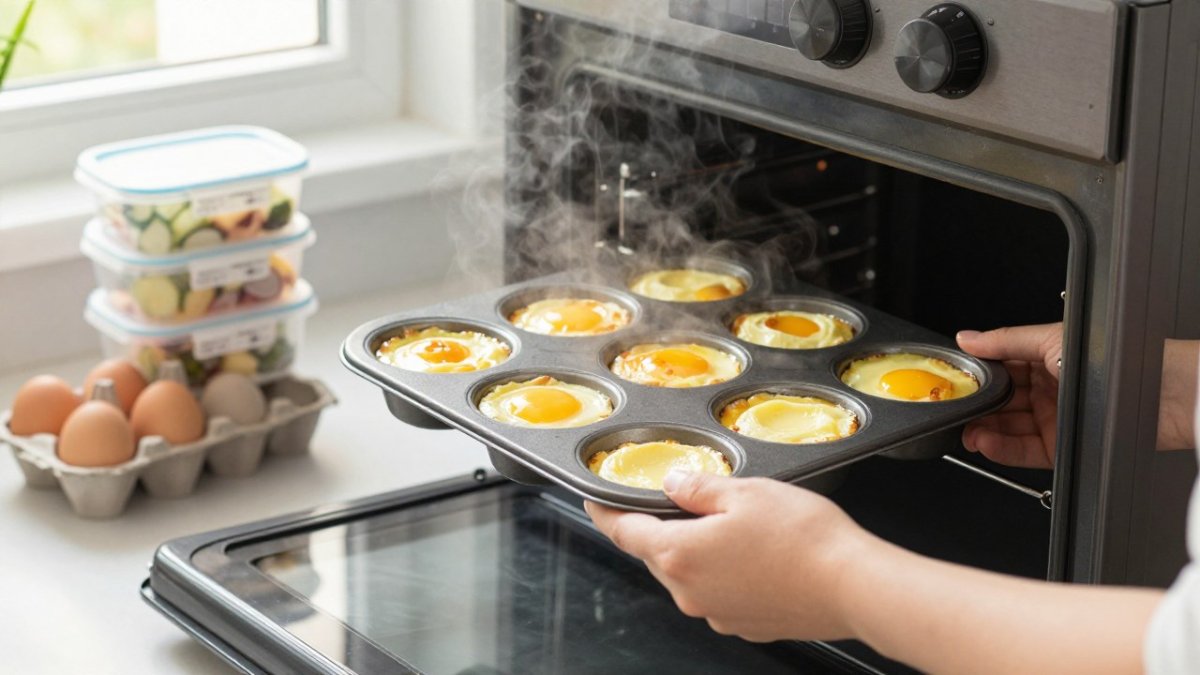
- Egg muffins: 8 eggs + vegetables + lean meat, baked in a muffin tin. Two muffins provide roughly 14-16g protein and reheat in seconds.
- Protein shakes: for days when whole food is not practical.
- Snack plates: cheese, boiled eggs, and nuts. A boiled egg here and a yogurt there can close a 30g gap without effort.
Prep Order (About 2 Hours)
- Start the oven and roast the chicken and vegetables on separate trays.
- Simmer the lentils on the stovetop while the oven runs.
- Cook the rice or couscous.
- Mix the tuna yogurt base and store it separately.
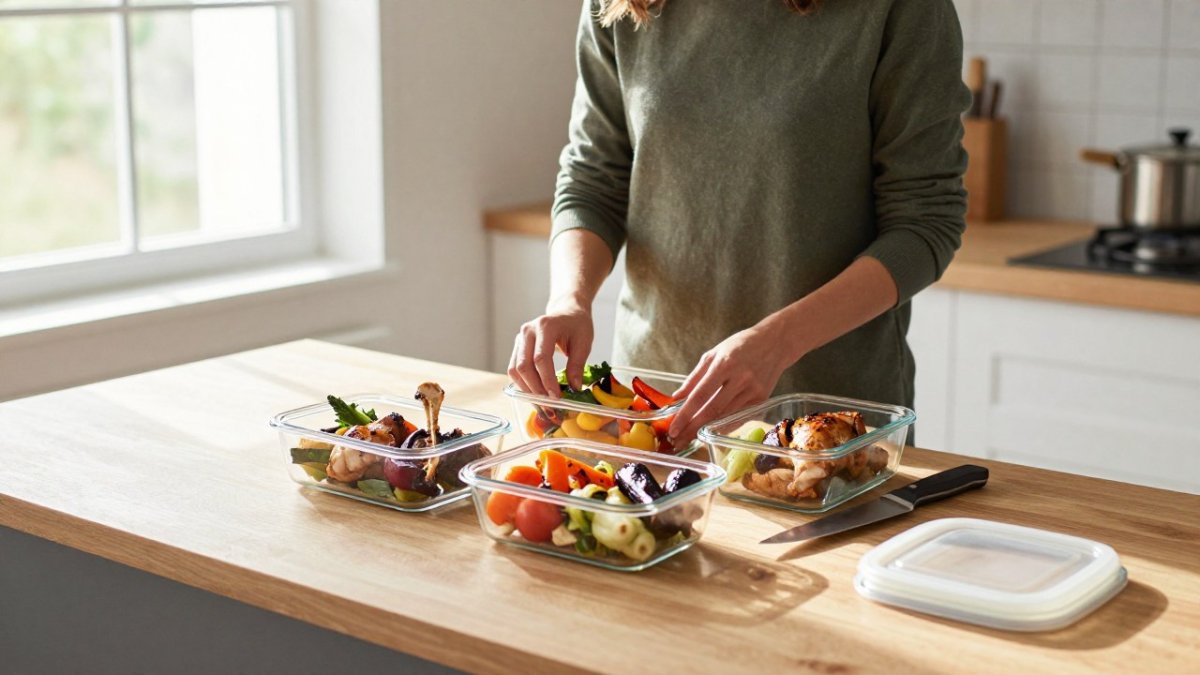
- Cool everything, then portion into containers by meal, not by ingredient, so each container is a complete meal.
Consolidated Shopping List
- Chicken thighs or breasts: 1.2 kg
- Dry lentils: 400g
- Canned tuna: 4 cans
- Greek yogurt: 1 kg tub
- Rice or couscous: 300g dry
- Oats: 250g
- Eggs: 18
- Vegetables: peppers, zucchini, broccoli, spinach, salad greens
- Flavor bases: stock, canned tomatoes, garlic, onion, lemon, mustard, spices, olive oil
This is the difference between a recipe list and a plan: quantities, per-serving protein, and a prep order that fits in one afternoon.
High Protein Macro Friendly Recipes for Weight Loss (Without Losing Flavor)
High protein macro friendly recipes for weight loss share one trait: volume without calorie density. You eat more food, not less.
The trick is choosing ingredients that fill the plate:
- Lean proteins: chicken breast, white fish, tuna, lean ground meat
- High-volume vegetables: peppers, zucchini, broccoli, leafy greens
- Flavor without fat: spices, citrus, vinegar, hot sauce, herbs
Flavor is not optional. Bland food gets abandoned by Thursday.
Two techniques that keep lean meals tasting good: marinate proteins before cooking, and add acid at the end. A squeeze of lemon over a reheated chicken bowl does more than any sauce.
If you're tracking weight loss progress alongside your macros, a progress log keeps you honest about what's actually working. Track your progress toward your goals in one place rather than guessing.
Portioning, Weighing, and Calculating Macros for Batch-Cooked Recipes
Portioning is where macro accuracy lives or dies. Cooked weight is not raw weight, and this is the mistake that throws off most batch-cooked numbers.
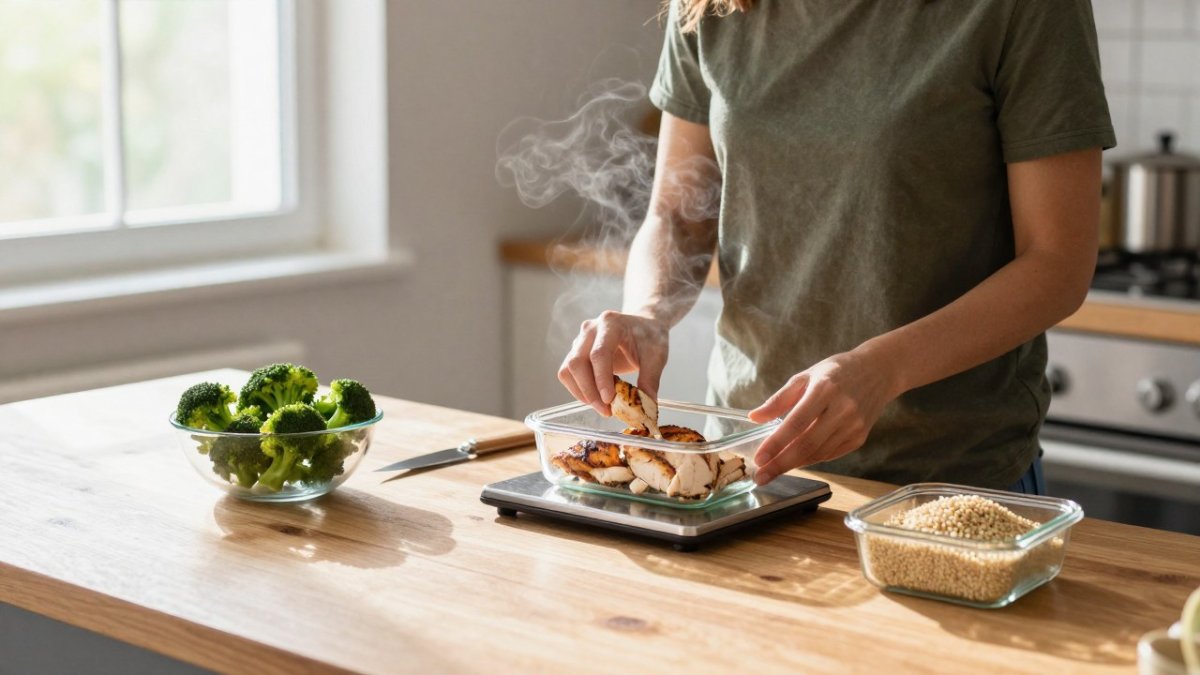
Weigh cooked when you must. Cooked meat loses water, so 200g raw chicken does not weigh 200g cooked.
Three habits that keep batch cooking accurate:
- Weigh the whole cooked batch before portioning
- Divide by the number of containers you filled
- Note the brand of any packaged ingredient you used
Brand matters. Nutrition information varies between brands for the same food, so a different yogurt or sauce changes the numbers.
Storage, Freezing, and Reheating: Keep Your Protein Meals Safe
Food safety is the part of meal prep nobody puts on Instagram. It's also the part that decides whether your Sunday cooking lasts to Friday.
Basic rules worth following:
- Cool cooked food quickly before sealing containers
- Refrigerate promptly rather than leaving containers on the counter
- Label containers with the date you cooked
- Freeze portions you won't eat within a few days
- Reheat to steaming hot, not just warm (the WHO)
For official guidance on safe storage times and temperatures, check your local food safety authority's published advice, since recommendations vary by country.
Reheating quality matters too. Chicken dries out fast in a microwave, so add a splash of water or sauce before reheating and cover the container.
A consolidated grocery list makes the whole process smoother. Generate your grocery list so you buy exactly what the plan needs, not a trolley of extras.
Build Your First Protein-Focused Prep Plan in MealPrepGenius
Start with one week, not one month. Pick three protein bases, one breakfast, and two snacks.
Then build the plan in four moves:
- Set your daily protein target and meals per day
- Choose your protein bases for the week
- Portion into containers and label them
- Shop from a single consolidated list
That's the whole system. Protein first, portions weighed, containers labeled.
MealPrepGenius handles the planning layer for you. Generate Plan to create a personalized protein-focused meal plan that hits your macro targets.
Hitting your protein macros consistently is a planning problem, not a discipline problem.
Frequently Asked Questions
How do I meal prep to hit my protein macros?
Start by calculating your daily protein target, then divide it across your meals. For example, if you need 140g of protein per day across four meals, aim for about 35g per meal. Choose protein-dense bases like chicken, tuna, lentils, or Greek yogurt, weigh portions after cooking, and store in labeled containers.
How much protein should I include in each meal?
A common approach is 25 to 40 grams of protein per main meal, adjusted to your total daily target and body weight. Spread your protein across breakfast, lunch, dinner, and snacks rather than loading it all into one meal. If your goal is muscle building, aim toward the higher end; for fat loss, keep protein high to preserve muscle while in a calorie deficit. Use a tracking app to confirm your portions match your plan.
How do I calculate macros for meal prep?
First, determine your daily calorie and protein needs based on your goals, then set fat and carbohydrate targets. For each recipe, add up the macros of all ingredients, divide by the number of servings, and weigh the finished dish to confirm portion sizes. Brands and cooking methods change the numbers, so use consistent ingredient entries and recheck when you swap products.
How long does high-protein meal prep last in the fridge?
Cooked chicken, fish, and plant-based proteins generally keep for 3 to 4 days in the fridge when stored in airtight containers at or below 4°C. Cool leftovers within two hours of cooking, label with the date, and reheat to steaming hot. For longer storage, freeze portions for up to 2 to 3 months and thaw overnight in the fridge. Always follow local food safety guidance and discard anything that smells or looks off.