 How-to
Is a Meal Prep Routine Worth It for a Busy Week?
Quick Summary
A meal prep routine is worth it for a busy week when it saves you from daily cooking decisions and last-minute takeout. It means cooking or assembling several meals in one session, then portioning them for the days ahead. It is less useful if your schedule changes every day.
- Pick one main prep day, usually Sunday, and repeat it so the routine is predictable.
- A first prep session usually takes about two hours, and many people finish in 60 to 90 minutes later.
- Pick three proteins, three grains or starches, and four vegetables, then mix them across the week.
- Cooked chicken, turkey, beef and fish keep 3 to 4 days in the refrigerator; freeze portions you will not eat within four days.
- If your schedule shifts, prep two or three days of meals instead of five rather than abandoning the plan.
Table of Contents
- Is a Meal Prep Routine Worth It for a Busy Week?
- Choosing Your Prep Day and Setting a Weekly Routine
- Planning Your Weekly Menu and Grocery List
- Meal Prep for Beginners: Starting With Simple Recipes for the Week
- High-Protein Meal Prep Ideas for the Week
- Meal Prep Food Storage and Safety Timelines
- Adapting Your Routine: Schedules, Budgets and Dietary Needs
- Setting Up Your Routine With MealPrepGenius
- Frequently Asked Questions
Is a Meal Prep Routine Worth It for a Busy Week?
Last Updated: November 24, 2026
Is a Meal Prep Routine Worth It for a Busy Week?
A meal prep routine is worth it for a busy week when it saves you from daily cooking decisions and last-minute takeout. A meal prep routine for a busy week means cooking or assembling several meals in one session, then portioning them for the days ahead.
Here is our honest answer. It is worth it if you lose more than a few hours a week to planning, shopping, and cooking, or if you keep ordering food you did not plan to eat. It is less useful if your schedule changes every day, though the sections below cover how to adapt. We will walk through prep day choices, a timed schedule, menus and grocery lists, beginner recipes, high-protein ideas, food safety, and how to handle changing schedules and dietary needs.
Choosing Your Prep Day and Setting a Weekly Routine
Most people do best with one main prep day, usually Sunday, with a shorter midweek refresh. The goal is to pick the day that fits your real calendar, not the ideal one.
Consider these options:
- Sunday prep: Covers Monday through Wednesday with one large session.
- Sunday plus Wednesday: Keeps food fresher and suits a split week.
- Weeknight prep: Works if weekends are packed with other plans.
Once you pick a day, repeat it. A routine you can predict is easier to keep than one you have to remember. Put the session on your calendar like any other appointment.
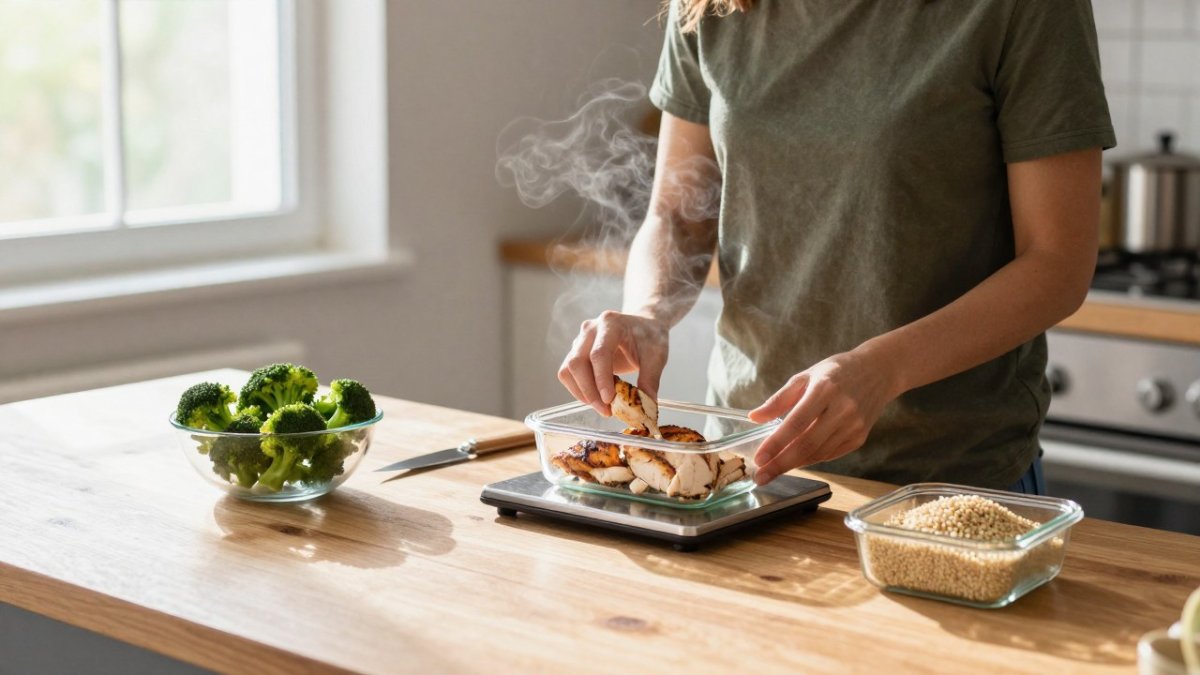
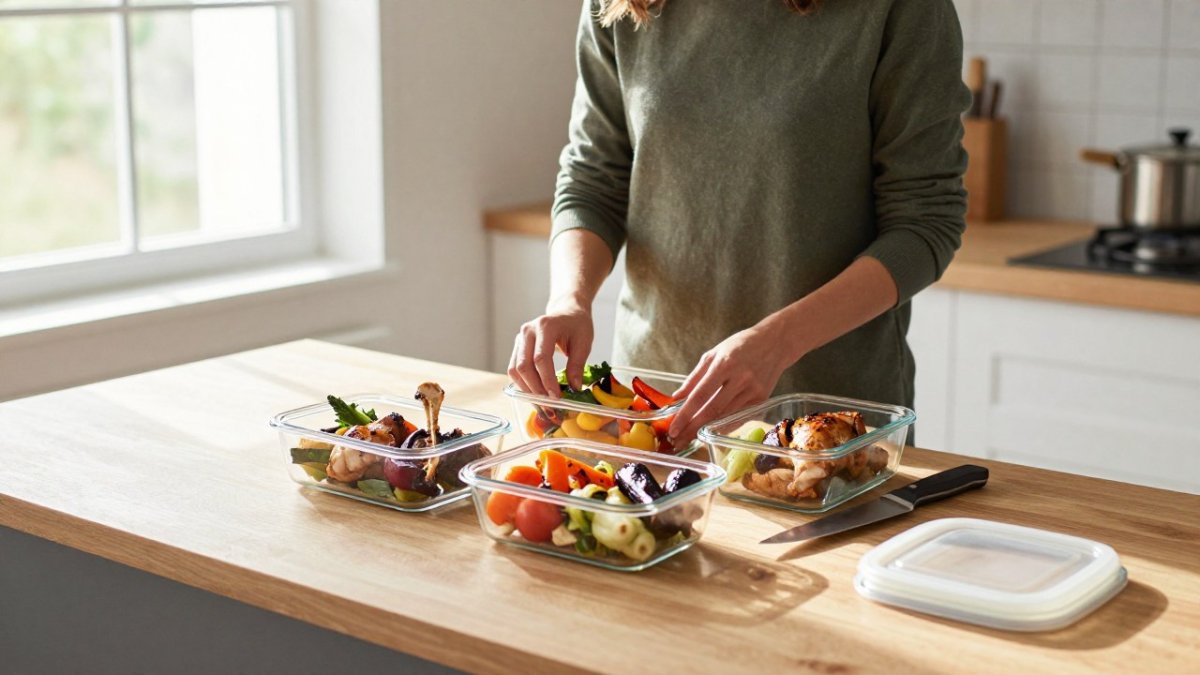
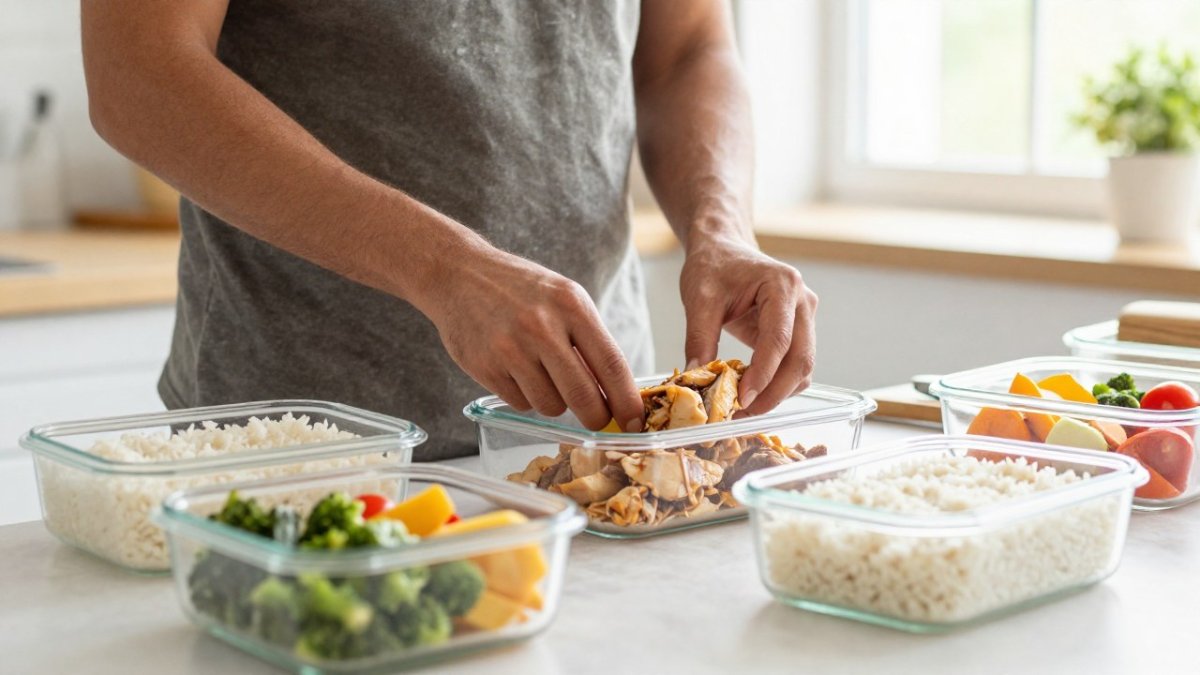
!A home cook in a bright kitchen portioning cooked chicken, rice and vegetables into glass meal prep containers on a Sunday afternoon
A Realistic Timed Prep Schedule
A first session usually takes about two hours. To see your prep week laid out, open the Weekly Plan view. Once you have done it a few times, many people finish in 60 to 90 minutes.
- 0:00 to 0:15: Set up. Preheat the oven and start rice or grains.
- 0:15 to 0:45: Roast proteins and vegetables on two sheet pans.
- 0:45 to 1:00: Cook grains and let proteins rest.
- 1:00 to 1:20: Portion meals into containers and label them with dates.
- 1:20 to 1:30: Clean the counter and store everything right away.
Watch out: leaving cooked food at room temperature while you portion it adds food safety risk. Work in batches and refrigerate finished containers promptly.
Planning Your Weekly Menu and Grocery List
A simple weekly menu keeps your grocery list short. Pick three proteins, three grains or starches, and four vegetables, then mix them across the week. This gives you variety without cooking a dozen different dishes.
Build your grocery list by category:
- Proteins: chicken thighs, ground turkey, eggs, tofu, or beans
- Grains: rice, quinoa, oats, or whole-wheat pasta
- Vegetables: broccoli, peppers, spinach, and carrots
- Pantry staples: olive oil, spices, and sauces
Check what you already have before you shop. Shopping with a list cuts impulse buys and reduces waste. MealPrepGenius can generate a personalized meal plan and grocery list from your goals, so you do not have to build them from scratch. You can generate meal plans and grocery lists directly from your goals.
Meal Prep for Beginners: Starting With Simple Recipes for the Week
Start with recipes that need few ingredients and little hands-on time. Sheet-pan meals and rice bowls are the easiest place to begin.
- Sheet-pan chicken and vegetables: Toss chicken and chopped vegetables in oil and spices, then roast for about 25 minutes.
- Rice bowls: Cook a large batch of rice and add roasted vegetables and a simple sauce.
- Overnight oats: Mix oats, milk, and fruit in jars for quick breakfasts.
Many beginners find that repeating the same three or four recipes is easier than learning new ones every week. Rotate one or two dishes at a time so the routine stays fresh without becoming hard to manage.
High-Protein Meal Prep Ideas for the Week
If protein is a priority, build each meal around one main source. Good options include:
- Grilled chicken breast with quinoa and roasted peppers
- Turkey chili that freezes well in portions
- Egg muffins with spinach and cheese for breakfast
- Lentil and vegetable bowls for a plant-based option
A useful rule: aim for a palm-sized portion of protein per meal. Pair it with vegetables and a complex carbohydrate, and the meal stays filling through the afternoon.
Meal Prep Food Storage and Safety Timelines
Food safety is the part of meal prep people most often get wrong. Cooked food is best eaten within a few days when kept in the refrigerator, and anything you will not eat in that window should go into the freezer.
Cooling cooked food safely: Do not put a large pot of hot chili directly into the refrigerator; it will warm the surrounding items and cool too slowly. Instead, divide hot food into shallow containers and leave them uncovered on the counter for no more than 20-30 minutes, then refrigerate. A common pattern is to spread food on a sheet pan to increase surface area and speed cooling. The goal is to get food from cooking temperature to refrigerator temperature within two hours.
Refrigeration timelines for common prepped foods:
- Cooked chicken, turkey, beef, and fish: 3-4 days in the refrigerator.
- Cooked rice, quinoa, and pasta: 3-5 days.
- Roasted vegetables: 3-4 days.
- Soups and stews: 3-4 days.
- Hard-boiled eggs (in shell): up to 1 week.
- Overnight oats: 3-4 days.
These are general guidelines. For official storage guidance, consult a government food safety authority in your country.
Freezing prepared meals: Freeze portions you will not eat within four days. Most cooked meals freeze well for 2-3 months. Use freezer-safe containers or heavy-duty freezer bags, label with the date, and leave a little headspace for expansion. Thaw overnight in the refrigerator, not on the counter.
Reheating safely: Reheat leftovers until steaming hot throughout, or to an internal temperature of 165°F (74°C). Stir halfway through microwaving to eliminate cold spots. Do not reheat food more than once.
Container and storage strategies that extend freshness:
- Use glass containers with airtight lids for most meals; they do not stain or hold odors.
- Keep wet and dry components separate (dressing on the side, sauce in a small jar) to prevent sogginess.
- Store strong-smelling foods like fish or onions in sealed containers to avoid flavor transfer.
- Label everything with the date and contents; a roll of masking tape and a marker works fine.
A simple food-waste tracker. For two weeks, note what you throw out and why (spoiled produce, uneaten leftovers, freezer burn). Adjust your next grocery list by buying smaller amounts of the items you discarded and shifting to frozen vegetables for the ones you consistently waste. This small habit reduces both waste and spending without requiring a complicated system.
Watch out: do not rely on smell or appearance alone to judge safety. If you are unsure how long something has been stored, throw it out. When in doubt, the safe choice is to discard.
The article gives these refrigeration timelines for common prepped foods, so you can check how long each one keeps.
| Food | Refrigerator time | Note |
|---|---|---|
| Cooked chicken, turkey, beef, fish | 3-4 days | General guideline |
| Cooked rice, quinoa, pasta | 3-5 days | General guideline |
| Roasted vegetables | 3-4 days | General guideline |
| Soups and stews | 3-4 days | General guideline |
| Hard-boiled eggs (in shell) | Up to 1 week | General guideline |
| Overnight oats | 3-4 days | General guideline |
Adapting Your Routine: Schedules, Budgets and Dietary Needs
Routines should bend, not break. If your schedule shifts, shorten your menu rather than abandoning the plan. Cook fewer meals and fill the gaps with simple fresh options.
Consider these adjustments:
- Changing schedules: Prep two or three days of meals instead of five.
- Tight budgets: Buy store-brand staples and use one protein across several meals.
- Dietary needs: Swap ingredients, such as tofu for chicken or gluten-free grains for wheat.
Tracking your grocery spending and food waste for a few weeks shows where money goes. Buying smaller amounts of fresh items can reduce waste.
Setting Up Your Routine With MealPrepGenius
Ready to build your routine? MealPrepGenius builds personalized plans and grocery lists around your goals, so you start with a clear plan instead of a blank page. Visit the Prep Coach to get a plan built around your routine.
MealPrepGenius also offers progress tracking and AI-driven recipe search and coaching. For current pricing and plan details, check the MealPrepGenius website.
Busy weeks are hard to plan around, and a meal prep routine turns that planning into a repeatable habit. MealPrepGenius is built to make that habit easier to keep.
Frequently Asked Questions
What is the 3-3-3 rule for meal prep?
The 3-3-3 rule is a simple way to structure a week of prepped meals: choose three proteins, three carbohydrate or vegetable sides, and three sauces or seasonings, then combine them in different ways across the week. It keeps meals varied while limiting the number of ingredients you cook. Because each component is reused, you spend less time shopping and cooking, and you avoid eating the same plate every day. Start with one protein you already like and expand from there once your routine feels settled.
How long does meal prep take for a week?
For most people, a meal prep session for a busy week takes about two to three hours on a single prep day, including shopping, chopping, cooking and portioning. Beginners often take longer the first time, so plan for a longer first session and then tighten your timing. Cooking proteins and grains in parallel, using sheet pans and a second oven rack, shortens the session. Splitting the work into a shorter shopping trip and a separate cooking block can also make it easier to sustain week after week.
Can I meal prep for seven days or only five?
Many people prep for five days and cook fresh or reheat a second batch midweek, because cooked food is safest and tastes best when eaten within a few days. Prepping for seven days is possible if you freeze portions for the later days of the week and thaw them the night before. Keep refrigerated cooked meals for no more than about three to four days, and freeze anything you will not eat in that window. Labelling containers with the cooking date makes it easy to track what needs eating first.