 How-to
Managing Multiple Dietary Restrictions in Meal Prep
Table of Contents
- Why Cooking for Multiple Diets Feels Impossible (And How to Fix It)
- The Real Bottleneck: Decision Fatigue, Not Cooking Skill
- The Base-Plus-Add-On Method for Managing Multiple Dietary Restrictions
- Meal Prep Templates for Restricted Diets: A Step-by-Step Walkthrough
- How to Manage Cross-Contamination in Meal Prep
- Best Meal Planning Apps for Dietary Restrictions
- Pantry Inventory Management for Multiple Diets
- Safe Storage and Reheating Protocols for Mixed-Diet Meals
- Common Mistakes That Derail Multi-Diet Meal Prep
- Frequently Asked Questions
Last Updated: October 1, 2026
Why Cooking for Multiple Diets Feels Impossible (And How to Fix It)
Managing multiple dietary restrictions in meal prep means planning, cooking, and storing meals that meet several dietary needs at once without doubling your kitchen time. The hard part is rarely the cooking, it is the constant decision-making. This guide breaks the process into a repeatable weekly system.
The Real Bottleneck: Decision Fatigue, Not Cooking Skill
Decision fatigue is the mental exhaustion that builds when you make too many small choices in a row. In a multi-diet kitchen, those choices multiply fast: separate pans, sauces, labels, and reheating rules.
- Decide the week's bases, proteins, and add-ons in one sitting
- Write one grocery list instead of three
- Label containers before you cook, not after
- Keep a running list of what each person can and cannot eat
The Base-Plus-Add-On Method for Managing Multiple Dietary Restrictions
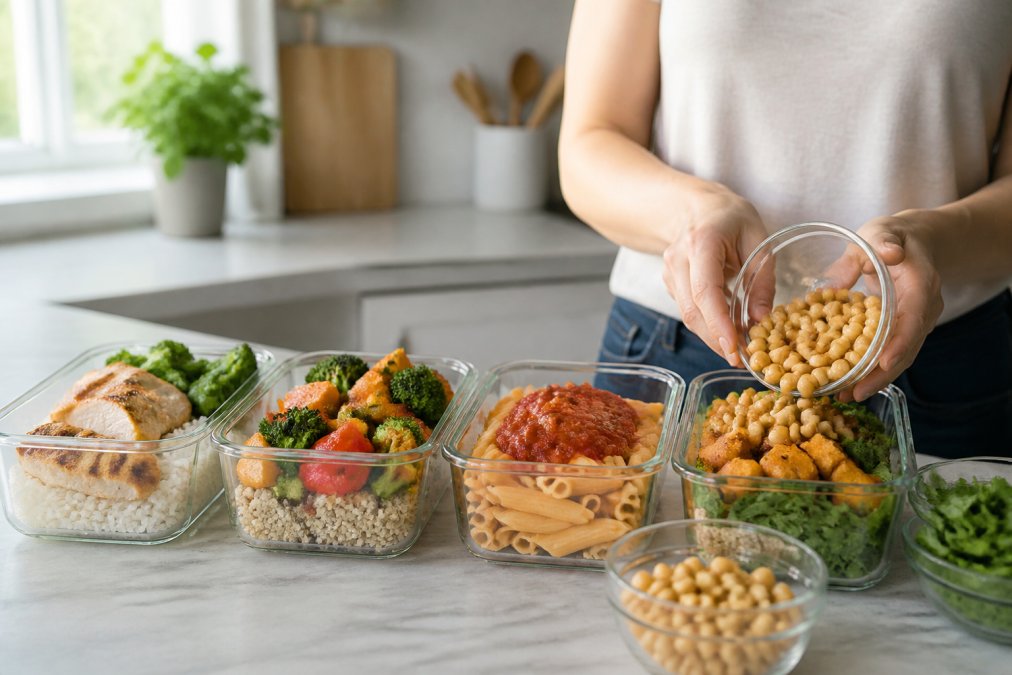
The Base-Plus-Add-On Method is a cooking system where you prepare neutral bases that suit every diet, then let each person customize their portion from a shared add-on station. It turns one cooking session into several meals.
Choosing Neutral Bases That Work Across Every Diet
A neutral base is any staple that fits the widest range of diets in your household: plain rice, quinoa, roasted potatoes, or salad greens. These carry no gluten, dairy, or high-FODMAP triggers on their own.
Building Your Add-On Station
The add-on station is where diets diverge. Set out proteins, sauces, and toppings in separate bowls so each person builds their own plate.
- Proteins: grilled chicken, lentils, chickpeas, tofu, boiled eggs
- Sauces: olive oil and lemon, tomato-based sauce, a dairy-free dressing
- Toppings: seeds, herbs, chopped vegetables, cheese on the side
Meal Prep Templates for Restricted Diets: A Step-by-Step Walkthrough
Meal prep templates for restricted diets are reusable weekly layouts that map each base and add-on to a person's needs, removing the daily "what can I eat" question.
Here is a simple template you can copy:
| Day | Base | Protein | Add-On | Diet Fit |
|---|---|---|---|---|
| Monday | Rice | Chicken | Lemon oil | Gluten-free |
| Tuesday | Quinoa | Chickpeas | Tomato sauce | Vegan, dairy-free |
| Wednesday | Potatoes | Lentils | Herbs | Low-FODMAP |
| Thursday | Rice | Tofu | Sesame oil | Dairy-free |
| Friday | Salad greens | Eggs | Vinaigrette | Low-carb |
Build yours in four steps:
- List every diet in the household and what each one must avoid
- Choose two neutral bases for the week
- Pick three proteins that cover the widest range
- Assign one combination to each day, then repeat the pattern
How to Manage Cross-Contamination in Meal Prep
Cross-contamination in meal prep is the transfer of an allergen or restricted ingredient through shared tools, surfaces, or hands. For serious allergies, this is the one step you cannot treat casually.
Follow this order every time:
- Prep allergen-free foods first, before anything else touches the board
- Use a separate cutting board and knife for each major allergen group
- Wash hands between handling different proteins
- Never reuse a spoon that has touched a restricted sauce
- Store allergen-free portions on a separate shelf, ideally the top one
Color-Coding and Container Systems That Actually Work
Color-coding is the simplest labeling system that survives a busy week: assign one color per diet, then use matching lids, stickers, or tape.
- Red lids for gluten-free portions
- Green lids for dairy-free or vegan meals
- Blue lids for low-carb or macro-tracked meals
- Write the day and diet on tape, not the lid
Best Meal Planning Apps for Dietary Restrictions
The best meal planning apps for dietary restrictions filter by multiple diets at once, generate a matching grocery list, and adjust the plan mid-week. Most apps handle one of those three well; few handle all three.
What to Look For (And What to Ignore)
Ignore fancy recipe libraries. You will use maybe ten recipes on repeat. What matters is how the app handles your specific restrictions.
- Multi-diet filtering: can it exclude gluten, dairy, and high-FODMAP foods at the same time? Test this with a real combination from your household, not a single restriction.
- Grocery list generation: does it build the list from your actual plan, or do you still copy items by hand?
- Mid-week changes: can you swap a meal without rebuilding the week? This is the feature that determines whether you stick with the app past week two.
- Macro tracking: does it show calories and macros per portion, and can it handle different targets for different people?
- Batch-prep tasks: does it tell you what to cook first, or just what to eat?
- Allergen flagging: does it warn you when a recipe conflicts with a saved restriction, or do you have to catch it yourself?
How the Main Options Compare
Most apps fall into three groups. Recipe-first apps are strong on inspiration but weak on grocery integration. Planning-first apps build solid weekly layouts but often limit you to one dietary profile. All-in-one apps combine recipes, lists, and prep tasks, but multi-diet filtering quality varies widely.
Pantry Inventory Management for Multiple Diets
Pantry inventory management for multiple diets means tracking which staples you have, which diet each suits, and when it runs low. Without it, you buy duplicates and still run out of the one thing you need.
The Two-Zone Pantry System
Divide your pantry into two zones: shared and restricted. The shared zone holds staples everyone can eat, plain rice, oats, olive oil, canned beans with no added sauces. The restricted zone holds anything only some people can eat, like wheat pasta, peanut butter, or dairy products.
Running a Two-Week Inventory
Run a quick inventory every two weeks. The goal is not a perfect spreadsheet. It is knowing what you have before you shop.
- Check base staples: rice, quinoa, potatoes, pasta
- Check proteins: canned beans, lentils, eggs, frozen chicken
- Check sauces and oils, since these carry most hidden allergens
- Check the restricted zone separately, because those items run out faster when only one person eats them
- Note anything running low and add it to your next list
Preventing Cross-Contamination in Storage
Storage containers matter as much as shelves. Use sealed containers for anything in the restricted zone, especially flours, nuts, and powdered mixes, which spread easily. Keep a dedicated scoop inside each restricted bin so nobody dips a shared utensil into a restricted item and back into a shared one.
Managing Conflicting Restrictions Without Duplicating Everything
The hardest pantry scenario is two restrictions pulling in opposite directions, like one person needing low-FODMAP and another needing high-fiber. You do not need two full pantries, just a shared base and a small set of add-ins.
Safe Storage and Reheating Protocols for Mixed-Diet Meals
Safe storage and reheating protocols keep mixed-diet meals from becoming a food safety problem. The rules match any kitchen, but the stakes are higher when one portion must stay allergen-free.
- Cool cooked food within two hours, then refrigerate (the WHO)
- Store allergen-free portions on the top shelf, sealed
- Label every container with the date
- Reheat only the portion you are eating, never the whole batch
- Use a food thermometer when reheating proteins
Common Mistakes That Derail Multi-Diet Meal Prep
The mistakes that derail multi-diet meal prep are predictable, and avoidable. Here are the most common.
- Cooking everything separately. You do not need three full meals. You need one base and several add-ons.
- Skipping the label. Unlabeled containers get thrown out or eaten by the wrong person.
- Buying specialty ingredients without a plan. They expire before you use them.
- Planning for a perfect week. Your schedule will change. Build in one flexible meal.
- Ignoring the mental load. If the plan takes an hour to decode each night, it will not last.
Frequently Asked Questions
What is the 3-3-3 rule for meal prep?
The 3-3-3 rule is a simple meal prep guideline: prepare 3 different proteins, 3 different carbohydrate bases, and 3 different vegetable sides each week. This gives you nine possible combinations, enough variety to avoid boredom while keeping your shopping list short. For households managing multiple dietary restrictions, the rule adapts well because you can choose proteins and bases that fit different diets, then mix and match per person. It reduces waste and decision fatigue simultaneously.
What are the most common meal prep mistakes to avoid?
The biggest mistakes are prepping full assembled meals for everyone instead of using a modular base-plus-add-on approach, storing incompatible ingredients together, and ignoring the psychological load of planning. Other frequent errors include buying specialty ingredients without checking pantry inventory first, failing to label containers with allergen information, and not accounting for mid-week schedule changes. Using meal prep templates for restricted diets and building in a flexible buffer day each week prevents most of these problems.
How do I create a grocery list for multiple dietary restrictions?
Start by identifying shared base ingredients that work across all diets in your household, such as rice, oats, or plain proteins. Then list add-ons and specialty items per person. Organize the list by store section to cut shopping time. The best meal planning apps for dietary restrictions can generate these lists automatically, separating shared items from diet-specific ones. Check your pantry before finalizing to avoid buying duplicates you already have.
How can I save time while meal prepping for different diets?
Batch cook neutral bases like grains and plain proteins once, then customize with add-ons during assembly. Use the same oven and stovetop session for multiple items. Prep ingredients, not finished meals, so each person can assemble their own plate. Apps like MealPrepGenius generate batch-prep task lists that sequence your cooking efficiently, and they can adjust your plan mid-week if schedules change. This modular approach typically saves several hours compared to cooking separate meals.
Cooking for several diets at once is a planning problem, and planning is exactly what software handles well. MealPrepGenius builds personalized meal plans, generates your grocery list automatically, and organizes batch-prep tasks so you cook once and portion out several ways. It also tracks your progress if you are managing macros alongside a household with its own restrictions. Get started with MealPrepGenius and take the decision fatigue out of your kitchen week.