 How-to
7-Day Meal Planning for Muscle Gain 2026 Made Simple
Last Updated: November 4, 2026
Quick Summary
Meal planning for muscle gain in 2026 means mapping your weekly food around a calorie surplus and a protein target before you shop, rather than deciding at 7pm what to eat. Build your week around a training-day template and a rest-day template, then rotate meals within each.
- Aim for roughly 1.6 to 2.2 grams of protein per kilogram of bodyweight daily, spread across three to five meals.
- Training days use a higher surplus with four protein feedings and higher carbs; rest days sit near maintenance with three feedings.
- Cook two proteins and two carb bases in bulk, portion into containers within two hours, and freeze what you won't eat in four days.
- Aim for 30 to 40g of protein at breakfast using eggs, Greek yogurt, cottage cheese, or a shake.
- If the scale hasn't moved in three weeks, recalculate your TDEE and adjust by 200 to 300 calories.
Table of Contents
- Why Meal Planning for Muscle Gain Works Better Than Wingin' It
- How to Track Macros for Beginners Without Losing Your Mind
- Your 7-Day Meal Plan for Muscle Gain: A Repeatable Template
- High Protein Meal Prep for Beginners: Batch, Portion, Repeat
- Budget-Friendly and Plant-Based Swaps That Still Build Muscle
- Foods to Avoid and Common Meal Planning Mistakes
- Set Up Your First Muscle-Building Plan in MealPrepGenius
- Frequently Asked Questions
Why Meal Planning for Muscle Gain Works Better Than Wingin' It
That gap is the whole problem.
You can lift four days a week and still see nothing change if your intake swings wildly. A hard session followed by a skipped meal and a takeaway dinner leaves your body short of the raw material it needs to rebuild.
Muscle growth, or hypertrophy, depends on three things working together: resistance training that creates the stimulus, a caloric surplus that supplies the energy, and enough protein spread across the day to support protein synthesis. Miss any one and the other two underperform.
Here's what most guides get wrong. They hand you a rigid plan and call it done. But life has rest days, late meetings, and weeks where the gym gets skipped.
So what does work? A repeatable template you can adjust in minutes.
The payoff is real: fewer decisions, less food waste, and a steady supply of the nutrients that drive lean mass.
How to Track Macros for Beginners Without Losing Your Mind
Most beginners quit macro tracking in week two because they try to weigh everything to the gram. You don't need that. You need three numbers and a rough sense of portion size.
Learning how to track macros for beginners comes down to four steps:
- Estimate your total daily energy expenditure (TDEE), the calories you burn in a normal day
- Add a small surplus, typically a few hundred calories above maintenance
- Set protein high, then fill the rest with carbs and fats
- Track consistently for two weeks, then adjust based on the scale and the mirror
That's it. Precision matters less than consistency at this stage.
Setting Your Calorie Surplus and Protein Target
Your caloric surplus should be modest. A large surplus adds fat faster than it adds muscle, so a small buffer above maintenance is generally the more measured approach.
For protein, a common approach is to aim for roughly 1.6 to 2.2 grams per kilogram of bodyweight per day. Spread it across three to five meals so each feeding delivers a meaningful dose of amino acids.
- Protein: the building block, set it first
- Complex carbohydrates: fuel for training and glycogen replenishment
- Essential fatty acids: support hormones and overall health
Reading Labels and Weighing Portions in Under Five Minutes
A food scale and a quick label scan beat guesswork every time. Weigh raw ingredients once, note the number, and reuse it. After a week you'll recognize a portion by sight.
Watch out: the biggest tracking error is forgetting cooking oils, sauces, and drinks. Those calories add up quietly and can erase a surplus or overshoot it.
Your 7-Day Meal Plan for Muscle Gain: A Repeatable Template
A 7-day meal plan for muscle gain doesn't need to be exotic. It needs structure. Build your week around a training-day template and a rest-day template, then rotate meals within each. Below is a full sample week you can copy, adjust, and reuse, plus how to sync it with a calorie-tracking app or wearable so your plan stays accurate in 2026.
The Training-Day and Rest-Day Templates
| Day Type | Calories | Protein Focus | Carb Level | Example Meals |
|---|---|---|---|---|
| Training day | Higher surplus | 4 protein feedings | Higher | Oats and eggs, chicken and rice, yogurt |
| Rest day | Near maintenance | 3 protein feedings | Lower | Omelette, salmon salad, cottage cheese |
| Busy day | Flexible | Shake plus prepped meals | Moderate | Protein shake, batch-prepped container |
A Full 7-Day Sample Week
Use this as a generic starting point; portions and calorie levels should be adjusted to your own body weight and goals.
Day 1, Training (Push)
- Breakfast: 3 eggs, 80g oats, 1 banana, 1 tbsp peanut butter
- Lunch: 200g chicken breast, 200g cooked rice, mixed vegetables
- Pre-workout: 1 scoop whey protein, 1 apple
Day 2, Training (Pull)
- Breakfast: 200g Greek yogurt, 60g granola, berries
- Lunch: 200g turkey, 2 slices whole-grain bread, avocado
- Pre-workout: 1 scoop whey protein, 1 banana
Day 3, Rest
- Breakfast: 3-egg omelette with spinach and cheese, 1 slice toast
- Lunch: 200g chicken thigh, large salad, olive oil dressing
- Dinner: 200g lean beef, roasted vegetables
Day 4, Training (Legs)
- Breakfast: 80g oats, 1 scoop whey protein, 1 banana
- Lunch: 200g chicken breast, 250g sweet potato, green beans
- Pre-workout: 1 scoop whey protein, 1 rice cake
Day 5, Rest
- Breakfast: 3 eggs, 1 slice whole-grain toast, avocado
- Lunch: 200g tuna, large salad, olive oil
- Dinner: 200g chicken breast, roasted vegetables
Day 6, Training (Upper)
- Breakfast: 200g Greek yogurt, 60g granola, berries
- Lunch: 200g turkey, 200g rice, mixed vegetables
- Pre-workout: 1 scoop whey protein, 1 apple
Day 7, Rest
- Breakfast: 3-egg omelette with cheese and vegetables
- Lunch: 200g chicken thigh, large salad, olive oil
- Dinner: 200g lean beef, roasted vegetables
You can see full example weeks on our sample plans page to model your own rotation.
Syncing Your Plan With Apps and Wearables in 2026
A printed plan is a starting point, not a fixed contract. Many people connect their meal plan to a calorie-tracking app or wearable to monitor their intake as their activity changes.
- Calorie-tracking apps (MyFitnessPal, Cronometer, Lose It!) let you log meals and see your daily surplus in real time. Import your plan's meals once, then adjust portions based on the app's feedback.
- Wearables (Apple Watch, Garmin, Whoop, Oura) estimate daily energy expenditure from heart rate and movement. On days your wearable shows higher activity, add a small snack; on lower-activity days, trim a portion.
- Sync strategy: Set your app's calorie goal to your planned surplus. If your wearable consistently shows you burning 300 more calories than your baseline, raise your intake by 200-300 calories and monitor the scale for two weeks.
Watch out: wearable calorie estimates can be off by 10-20%, so treat them as a trend indicator, not a precise number. Use the scale and gym performance as your primary feedback.
What a Typical Training Day Looks Like on the Plate
A training day leans on carbs around your workout. Think oats and eggs at breakfast, a protein and rice lunch, a pre-workout snack, then a post-workout meal with fast carbs for glycogen replenishment and protein for muscle fiber repair.
The anabolic window is wider than old advice suggested, but eating within a couple of hours still helps.
Adjusting the Plan for Rest Days and Busy Weeks
Rest days need fewer carbs, not fewer nutrients. Keep protein steady and trim portions slightly. When a week goes sideways, our Prep Coach can help you reshuffle meals without starting over.
High Protein Meal Prep for Beginners: Batch, Portion, Repeat
High protein meal prep for beginners is simple: cook two proteins and two carb bases in bulk, portion them into containers, and build meals from that base all week.
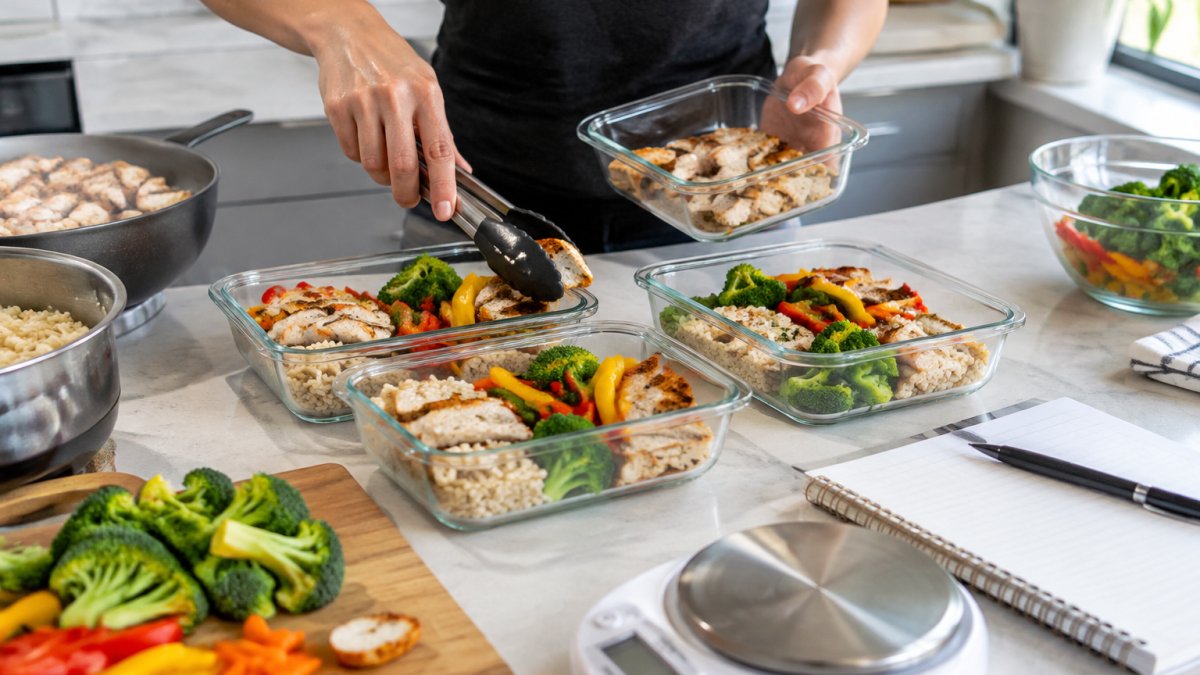
The routine that works:
- Pick two proteins (chicken, eggs, tofu, or fish)
- Cook one large batch of rice, potatoes, or pasta
- Roast a tray of vegetables
Portion control is where beginners drift. Use the scale for the first few batches, then trust your eye. Our batch prep tools map the cooking order so nothing sits cooling on the counter too long.
Budget-Friendly and Plant-Based Swaps That Still Build Muscle
You don't need steak and salmon to grow. Eggs, dairy, lentils, beans, and tofu deliver quality protein at a fraction of the cost, and plant-based lifters can hit their targets with a little planning.
The trick is combining sources. Beans and rice, or lentils with whole grains, create a complete amino acid profile. Soy and pea protein are also strong options.
- Budget swaps: eggs for salmon, lentils for beef, frozen veg for fresh
- Plant-based swaps: tofu and tempeh for chicken, soy milk for dairy
- Satiety boosters: high-fiber carbs keep you full on fewer calories
Once your swaps are set, let our grocery list page build the shopping list automatically so nothing gets missed.
Foods to Avoid and Common Meal Planning Mistakes
The foods that hurt muscle gain aren't "bad" so much as unhelpful. They crowd out the meals that actually build lean mass, and they do it in specific ways you can plan around.
Foods That Undermine Muscle Gain
- Sugary drinks and juices: Liquid calories spike blood sugar without delivering protein or micronutrients. A 20-oz soda adds roughly 240 calories and zero grams of protein, calories that could have been a protein-rich snack.
- Highly processed snacks (chips, cookies, pastries): They are calorie-dense but nutrient-poor, and they displace hunger for meals that supply amino acids. A bag of chips at 3pm often means a smaller dinner.
- Alcohol: Regular drinking impairs muscle protein synthesis and disrupts sleep, both of which slow recovery. It also adds empty calories that can push you out of a controlled surplus.
Three Mistakes We See Most Often
- Under-eating protein at breakfast. A carb-heavy morning leaves you short all day. Aim for 30-40g of protein at breakfast, eggs, Greek yogurt, cottage cheese, or a shake.
- Skipping meals on rest days. Recovery still needs fuel. Muscle repair continues on rest days, so keep protein steady even when carbs drop.
- Never adjusting the plan. If the scale hasn't moved in three weeks, your surplus is off. Recalculate your TDEE, check your tracking accuracy, and adjust by 200-300 calories.
Watch out: relying on supplements to patch a weak plan. Supplements support a good diet, they don't replace one. If your protein intake is inconsistent, fix the meals first, a shake is a tool, not a foundation.
The Fix: Plan Around the Gaps
A practical approach is to build your plan so the unhelpful foods have less room. Fill your day with protein-forward meals and fiber-rich carbs, and keep convenient protein snacks (Greek yogurt, cottage cheese, boiled eggs, jerky) visible and ready. When hunger hits, the easiest option should be the one that supports your goal.
Set Up Your First Muscle-Building Plan in MealPrepGenius
Getting started takes minutes, not weeks. MealPrepGenius generates personalized meal plans, and builds grocery lists and batch-prep tasks to match.
Here's how to launch your first week:
- Enter your goals and any dietary restrictions
- Let the AI generate your weekly plan and recipes
- Review the automated grocery list
- Follow the batch-prep tasks on your prep day
- Track progress across the platform and adjust weekly
Ready to build your own? Generate your plan and see the full week laid out before you cook a single meal.
The hardest part of muscle gain isn't the training, it's keeping nutrition consistent when your schedule isn't. MealPrepGenius handles the planning, grocery lists, and batch-prep scheduling so you can focus on lifting and recovery.
Frequently Asked Questions
How many calories do I need for muscle gain in 2026?
Start by estimating your total daily energy expenditure, then add a surplus of roughly 250 to 350 calories per day. Most people building muscle aim for 0.6 to 1 gram of protein per pound of bodyweight within that total. Track your weight and lifts for three to four weeks; if the scale barely moves and strength stalls, add another 150 to 200 calories. Meal planning makes this easier because you set the surplus once and repeat it across the week instead of guessing at every meal.
How do I track macros for beginners without weighing every bite?
Weigh and log your food for the first two weeks to learn portion sizes, then switch to eyeballing common servings. Focus on hitting protein and total calories first; carbs and fats can flex. Build a small rotation of repeat meals so logging takes seconds rather than minutes. Apps that store your recipes and portion sizes cut the friction further, and after a month most people can estimate a chicken breast or cup of rice accurately enough to stay on track.
Can meal planning help me build muscle while losing fat?
Yes, but the plan changes. You need a smaller calorie deficit, high protein, and consistent resistance training to protect lean mass. Aim for roughly 1 gram of protein per pound of bodyweight, keep carbs around training sessions for glycogen replenishment, and accept slower strength gains. Planned meals matter more here because unplanned eating easily wipes out a modest deficit. Track body composition and gym performance together rather than relying on the scale alone.
What should a high protein meal prep for beginners include?
Build each container around a palm-sized protein source such as chicken, lean beef, eggs, Greek yogurt, tofu, or lentils. Add a fist of complex carbohydrates like rice, potatoes, or oats, then fill the rest with vegetables for micronutrients and fiber. Prep two or three proteins and two carb bases on one day, then mix them across the week so meals do not taste identical. Portion into containers immediately after cooking to keep calories consistent and cleanup quick.