 Listicle
Best Budget Meal Prep Containers for Freezing
Last Updated: November 11, 2026
Quick Summary
The best budget meal prep containers for freezing balance a freezer-safe material, a sealing lid, and a low price per container. Our picks include budget plastic options like Bentgo Prep and Freshware, mid-tier glass like Pyrex Simply Store, and disposable foil pans as the cheapest route per unit.
- We judged containers on freezer suitability, lid seal, durability, stackability, and cost per unit.
- Glass suits food frozen for months, while plastic is best for weeks of storage.
- Leave about 1 to 2 cm of headspace for liquids and about 1 cm for grains.
- Never thaw food on the counter at room temperature; move containers to the fridge instead.
- Divide set price by container count to compare cost per unit, not set price.
Table of Contents
- Best Budget Meal Prep Containers for Freezing at a Glance
- How We Evaluated These Freezer Containers
- Best Freezer Containers for Meal Prep: Budget Picks and What They Cost
- Meal Prep Containers Glass: Where Glass Earns Its Price
- Glass vs Plastic Containers for Freezing Food: The Real Trade-Offs
- Batch Cooking Containers for Freezer: Sizing, Headspace, and Thawing
- Cost Per Container and Long-Term Value
- Plan Your Freezer Meals Around Your Containers
- Frequently Asked Questions
Best Budget Meal Prep Containers for Freezing at a Glance
The best budget meal prep containers for freezing balance three things: a freezer-safe material, a sealing lid, and a low price per container.
Our short list:
| Pick | Material | Best For | Price Signal |
|---|---|---|---|
| Bentgo Prep | Plastic | Cheapest reusable route | Budget tier |
| Freshware | Plastic | High-volume single servings | Budget tier |
| Rubbermaid Brilliance | Plastic | Leakproof transport | Mid tier |
| Pyrex Simply Store | Glass | Leftovers and proteins | Mid tier |
| Prep Naturals set | Glass | Buying a full set at once | Around $40 per set |
| Foil pans | Aluminum | Freezer-to-oven batches | Cheapest per unit |
How We Evaluated These Freezer Containers
We judged containers on five criteria: freezer suitability, lid seal, material durability, stackability, and cost per unit.
Freezer suitability comes first because it is the one spec shoppers skip. A container rated for the fridge is not automatically rated for the freezer, and US Department of Agriculture food safety guidance is clear that safe storage depends on the container and the temperature, not just the food.
Lid seal matters more in a freezer than anywhere else. Cold air dries food out, so a loose lid makes freezer burn more likely.
Durability covers crack resistance and stain and odor retention. Plastic takes on tomato and curry color over time; glass does not, but it chips if stacked carelessly.
Stackability decides whether a small freezer holds twelve meals or four. Nestable empty containers and flat, square footprints win.
Best Freezer Containers for Meal Prep: Budget Picks and What They Cost
The best freezer containers for meal prep fall into three price bands: budget plastic, mid-range glass, and disposable foil. Each trades cost against durability and reheating.
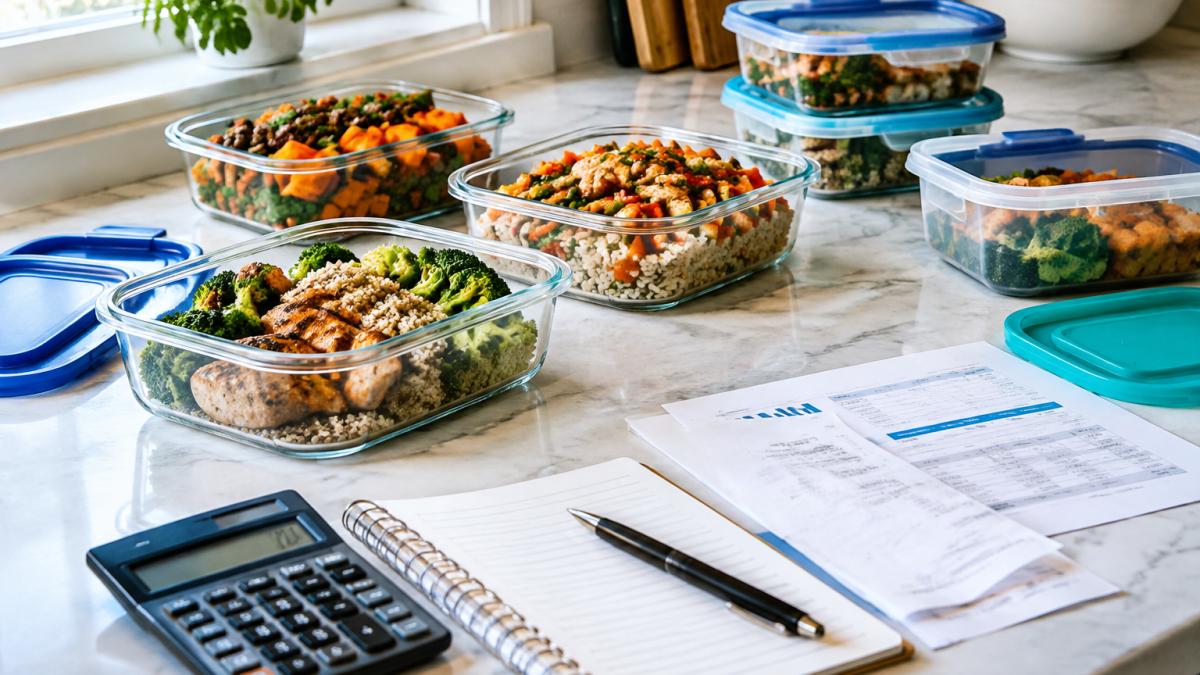
Reusable Plastic Picks: Bentgo Prep, Freshware, and Rubbermaid Brilliance
Best for: Bentgo Prep and Freshware suit bulk batch cooks on the tightest budget. Rubbermaid Brilliance suits commuters who need a leakproof seal. Skip if: you freeze soups and stews for months at a time. Glass handles long storage better.
Glass Picks: Pyrex Simply Store and Prep Naturals
Best for: anyone freezing cooked food for more than a month, or reheating directly in the container. Skip if: you need light containers for carrying to work daily.
Specialty Options: Vacuum Sealing, Compartments, and Disposable Foil Pans
Disposable foil baking pans are the cheapest route per unit and the right answer for freezer-to-oven meals: cook a lasagna, freeze it in the pan, bake it from frozen. Long-term value is zero, but for bulk cooks feeding a family they are hard to beat on cost.
Meal Prep Containers Glass: Where Glass Earns Its Price
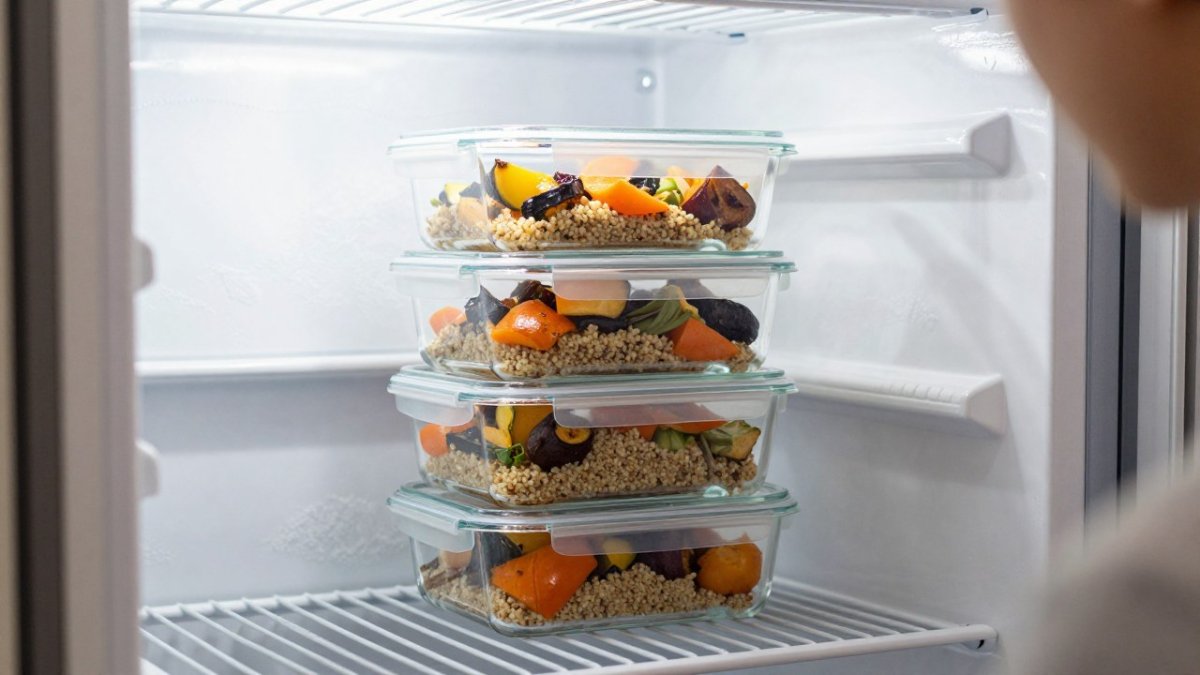
The honest limitation: glass is heavy and it chips. Stack it with a cloth or paper towel between containers, and never move a glass container straight from the freezer into a hot oven. Let it start in a cold oven or thaw first.
Glass vs Plastic Containers for Freezing Food: The Real Trade-Offs
Choosing between glass and plastic containers for freezing food comes down to trade-offs in cost, weight, durability, and how long you plan to store the food.
| Factor | Glass | Plastic |
|---|---|---|
| Upfront cost | Higher per container | Lower per container |
| Weight | Heavy | Light |
| Stain and odor | None | Builds over time |
| Freezer-to-oven | Often yes | Rarely |
| Crack risk | Chips, cracks on thermal shock | Cracks in deep cold if overfilled |
| Best storage length | Months | Weeks |
Water expands as it freezes, so a container filled to the brim can crack or pop its lid. That applies to both materials.
Batch Cooking Containers for Freezer: Sizing, Headspace, and Thawing
Sizing: match the container to the portion, not the batch. A single-serving container thaws in hours; a family-sized one can take a full day in the fridge. As a working guide, a 1-cup container suits a side or a small soup portion, a 2-cup container suits a single adult entree, and a 4-cup or larger container suits a family portion or a batch sauce. If you want to browse recipes sized to your containers, recipe search lets you match portions before you cook.
Headspace by food type: liquids expand as they freeze, so soups, stews, sauces, and broths need the most room, roughly 1 to 2 cm below the rim. Grains and cooked rice expand less but still benefit from a small gap, about 1 cm, because they hold moisture. Cooked proteins and chopped vegetables need the least, but never fill to the brim because ice crystals can still push a lid loose. Complete meals that mix a wet component and a dry one are the trickiest: leave headspace sized to the wettest part, not the average.
Thawing by food type: move containers to the fridge the night before for soups, stews, and complete meals, which thaw slowly and evenly. Grains and cooked proteins thaw faster and can go from freezer to microwave defrost if you cook immediately after. Never thaw on the counter at room temperature. For a faster route on liquids, run the container under cool water or use the microwave defrost setting, then reheat to steaming.
Reheating: glass rated freezer-to-oven can go from cold oven to hot, but start it in a cold oven rather than preheated to avoid thermal shock. Plastic should be reheated only if labeled microwave-safe, and lids should come off first so steam can escape.
How Much Headspace to Leave and How to Prevent Cracking
Leave about 1 to 2 cm of headspace for anything liquid, about 1 cm for grains, and never fill a glass container past the shoulder. Cracking comes from three sources: overfilling, thermal shock, and stacking heavy containers on cold glass.
To prevent it, cool food completely before it goes in the freezer, fill to the shoulder rather than the rim, and let frozen glass sit at room temperature for a minute before reheating. Watch out: putting a frozen glass container straight into a hot oven or a sink of hot water is the fastest way to crack it, and the crack often appears only after the second or third freeze-thaw cycle, not the first.
Cost Per Container and Long-Term Value
The formula has three steps. Divide the set price by the number of containers to get cost per unit. Divide that by the months you expect to use it to get cost per container-month. Divide again by meals packed per month to get cost per meal. A set that looks cheap on the shelf can lose on the third number once you account for replacement.
The exact crossover depends on your pack size and how hard you use the containers, so run the formula with your own numbers rather than trusting a general rule.
Pack size matters as much as unit price. A 10-pack and a 20-pack of the same line often differ in cost per unit, and the larger pack only wins if you will actually fill and rotate all of them. Match pack size to the number of portions you freeze in a typical batch, not to the discount.
Lids are the hidden long-term cost.
Watch out: comparing a set price to a single-container price is the most common math error. Always normalize to cost per container first, then to cost per meal, or the comparison is meaningless.
Plan Your Freezer Meals Around Your Containers
Start with a batch prep workflow that assigns each recipe to a container size, so you cook in portions that fit. Then build the week with a meal prep plan that accounts for what is already frozen. Finish with an automated grocery list so you shop for the batch once instead of making three trips.
MealPrepGenius generates personalized recipes, batch-prep tasks, and grocery lists to help you plan your meals. Personalized meal plans, automated grocery list generation, and batch-prep task management keep the whole system in one place, with progress tracking so you can see what is working. Get started with MealPrepGenius and turn a full freezer into a week of meals you do not have to think about.
Frequently Asked Questions
What is the best container to freeze meal prep?
There is no single best container, but the safest budget choice depends on how you reheat. Whichever meal prep containers you pick, confirm the manufacturer lists them as freezer-safe, leave 1-2 cm of headspace for liquid expansion, and let food cool before sealing.
Are glass or plastic containers better for freezing meal prep?
Glass wins on durability, stain resistance, and freezer-to-oven use, but it costs more and cracks if liquid expands against a full jar or if you move it straight from freezer to hot oven. Plastic is lighter, cheaper, and budget-friendly, though it can hold odors over time and may not be oven-safe. For most people, a mix works: glass for soups and saucy batch cooking, plastic for single-serving meals and lunches.
How much headspace should I leave when freezing food in a container?
Leave roughly 1-2 cm of headspace for soups, stews, and other high-liquid foods, and about 1 cm for grains and casseroles. Liquid expansion during freezing is the main cause of cracked containers and popped lids. Using containers with straight sides and a clear fill line makes this easier, and slightly underfilling beats overfilling every time. If you are unsure, freeze the liquid in a silicone tray first, then transfer the blocks to a container.
How do I keep meal prep containers from cracking in the freezer?
Three habits prevent most cracks: leave headspace for liquid expansion, avoid filling containers to the brim with high-moisture foods, and let glass warm slightly before moving it to heat. Choose containers described as freezer-safe and crack-resistant, and skip thin disposable plastic for long-term storage. Repeated freeze-thaw cycles are the real test, so rotate older meals to the front and avoid refreezing thawed food.
Can I freeze meals in meal prep containers?
Yes, provided the container is rated freezer-safe and you account for liquid expansion. Portion meals into single-serving sizes so they thaw evenly, seal with an airtight lid, and label with the date. Thaw in the fridge overnight rather than on the counter, then reheat thoroughly.